
For my friends back home in the US, who seem to read about North Korea a lot these days, the DMZ (비무장지대) is the DeMilitarized Zone which forms a buffer along the border between North Korea & South Korea. None of it actually borders Seoul, but most of it is just a stone's throw away.
Though a truce was signed in 1953, the two countries are technically still at war. Yet the DMZ is still a very common daytrip from Seoul, especially for tourists spending a couple of weeks in Korea. Every year, millions of people are visiting a war zone, yet it feels nothing like the gruesome images of War we're taught to expect.
In fact, South Korea is now better known for its pop music and cosmetics than for its battle at the northern border. Did you know that North Korea's official name is the Democratic People's Republic of Korea? A counter-intuitive name for all of those who hear about the starvation, forced labor camps, and harsh laws which have been enforced within those borders.
Jump To
The Democratic People's Republic of Korea
There are even still elections in the DPRK these days, though there is only ever one name on the ballot. However, it makes sense for a country created with the ideals of equal opportunities and chances for all.
Over sixty years ago, after the Korean War, North Korea was receiving support from the communist USSR's government, and such utopian ideals certainly seemed achievable. After all, they had just overcome decades of Japanese occupation, and were working adamantly towards peace and equality throughout the Korean peninsula, albeit once everyone was under the same government again.
Since then the North has experienced numerous famines, seen tens of thousands of people risk their lives to defect (two already the week of posting), and lost Soviet support with the dismantling of the USSR, among other things.
We were lucky enough to have a North Korean woman with us, even younger than myself, in fact, who only recently arrived in the South after a long journey defecting. We went to a total of six places in the twelve hours we spent in and around to the border zone, a day we started near the metro station in Hapjeong (합정)*.
Read another visitor's DMZ experience here.
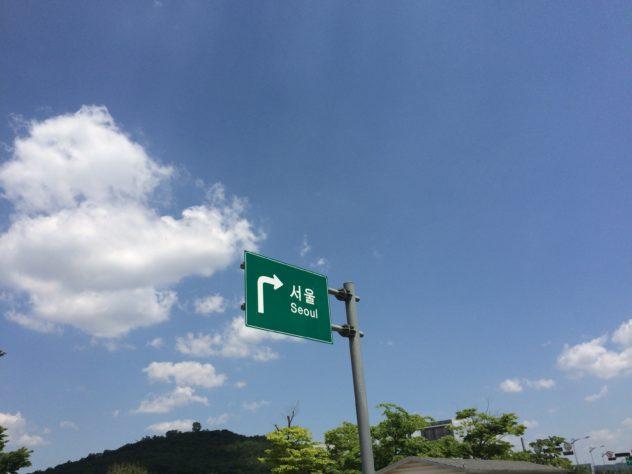
Heading to the Border Region
Logically, I know that the distance between the city of Seoul & the closest North Korean city is much smaller than my mother would like it to be. But only on the bus from Hapjeong did I realize exactly how close— a mere 20 minutes from my favorite weekend hangout.
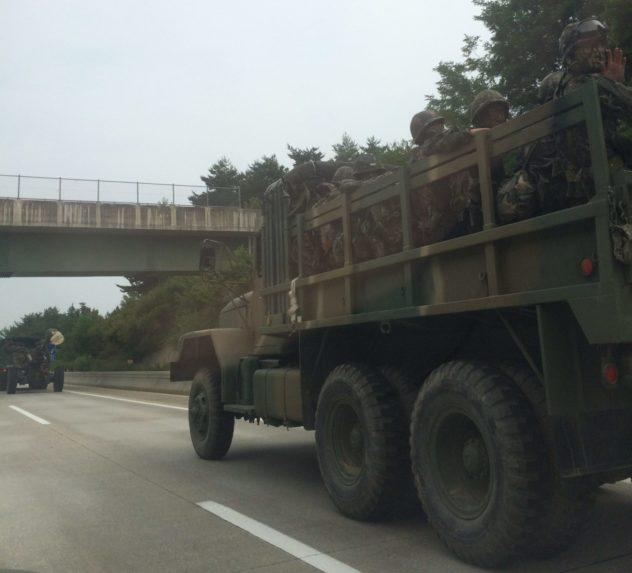
Along this immense dividing line are still people farming rice paddies and working out in outdoor exercise parks. A huge highway runs along this border fence, lush with green trees along the river, across from a barren brick-colored land we are told is our first glimpse of North Korea.
Passing by this so casually shocked us all a bit, but our guide eased us into this discussion of the border fence and the varying sights on the other side. It's widely thought of as the most heavily militarized border in the world; it's 250km along both Gyeonggi (경기도) & Gangwon (강원도) provinces, and sees a number of rivers, miles and miles of pristine forest, as well as several towns.
The phrase that kept popping up all day to describe the zone was "wildlife sanctuary." During the forty minute ride to and along the DMZ we discussed the history of the Koreas and the relatively recent parting of ways, as well as how the DMZ came to fruition. Just to appease those people with my mother's tendencies, he also listed some of the many reasons why North Korea would never attack South Korea.
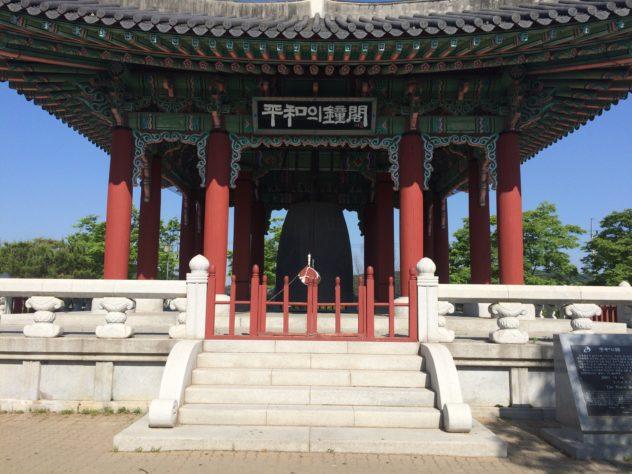
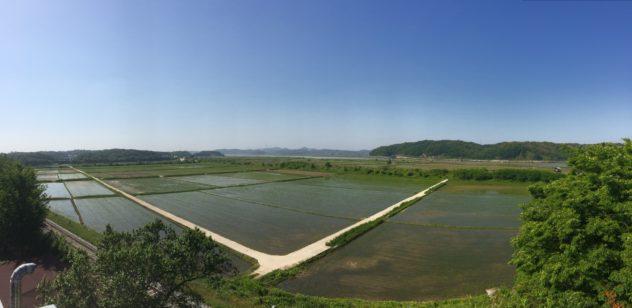
When we finally got off the bus at the DMZ pre-Purgatory, KoRail's ImJinGang station (임진강 역), we saw vast swaths of rice fields across the border, as well as the more famous spots of the freedom bridge and some military outposts.
If we so chose, we could even try on some military uniforms, which my friend declined since it gave him flashbacks to his own mandatory service. Most all of the people there at that hour were preparing for some kind of peace march in huge numbers. Apparently bikes were involved.
We loaded back up onto the bus after 27 minutes and crossed the unification bridge, the same one they use to send basic support supplies to NK. At the border zone entrance located in Paju City (파주시), they stopped the bus and checked everyone's IDs, or at least the fact that they had them, and then inspected our bus and we continued on.
Tunnel 3 (3당굴)
This underground passageway was found thanks to help from a North Korean defector who told the government of the south such infiltration attempts existed. Back then they explored the ground with pipe bombs until they hit pay dirt... or lack thereof. So far four of these sorts of tunnels have been publicly found, all in different areas of the border.
Before entering the low-ceiling tunnel, you can watch a strange promotional video about it, though it made me feel like I was in a different country, reviewing for a Korean history exam. Wearing the standard yellow hardhats, we walked almost a kilometer down and through part of the tunnel, sweating heavily despite the cool temperature.
There wasn't much to see inside, and no cameras or other electronics were allowed, so nobody was taking pictures of the one descriptive sign halfway down. There is a tram that appears to go both down and back up, but you must have to pay extra far that because our brightly colored hats expressly excluded us from the free ride back up.
It was a wet walk. If you're not interested in the tunnel, or don't like small spaces, there's also a small park right outside of the entrance with some Korean caricature statues & a few winding paths.
Observation Deck (점망대)
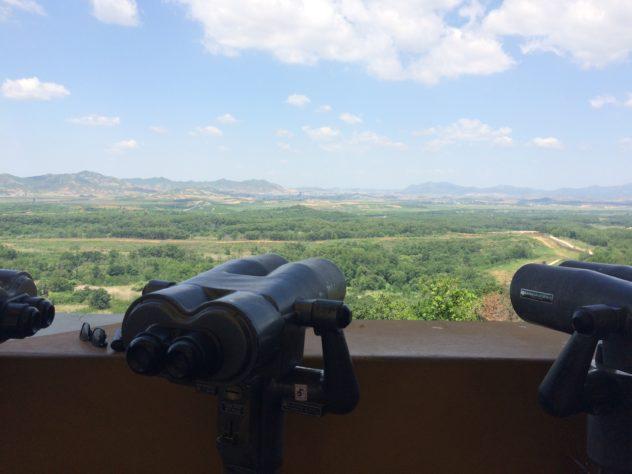
This is a very small patch of land with a military base and a parking lot, and a whole lot of Keep Out signs to keep you close to those two things. Nearby there's also a small souvenir shop where you can buy snacks, and a money changer who deals in ₩1000 bills. My best advice is to bring some ₩500 coins or even better, a good pair of binoculars.
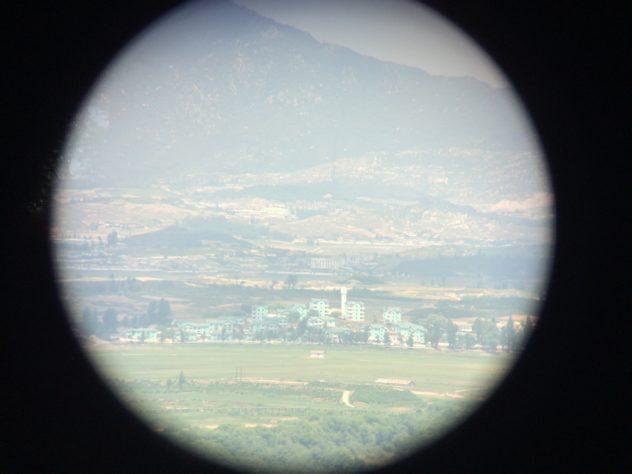
This region of the DMZ is mountainous and barren, but that in itself is worth looking at. It's a highly regulated area since you can actually see a tiny North Korean city from this platform, and hear the South Korean radio the military base here is playing loudly in the direction of any residents who might live there.
Dora Station (도라역)
Sitting right at the border in the middle of the Koreas is an abandoned train station, part of the Korean Railroad system, which is still staffed daily in order to cater to tourists like myself.
It was built in the year 2000 thanks to donations from people hoping wholeheartedly for reunification of the Koreas, and willing to contribute so that one day you will be able to ride directly from southern Korea to northern, even right up to the Chinese border, from where you could take a train to Portugal.
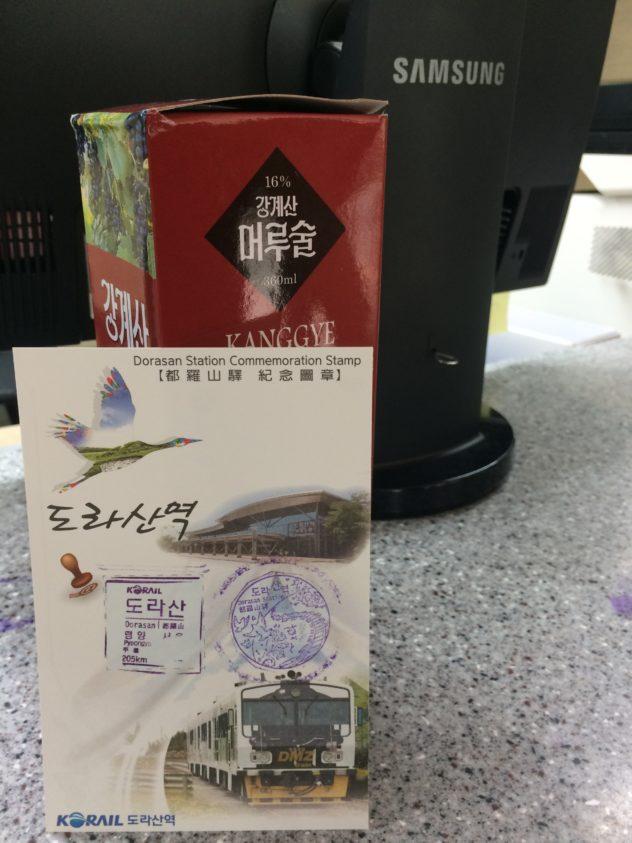
Inside it looks just like any other Korail station, which in and of itself was eerie enough. At the counter you can ink your passport or a postcard with commemorative NK/Dora Station stamp, as well as buy wine made in North Korea (we bought some, and it's pretty awful; my friend said that the woman told us to keep it upright since "the technology of lids" has not quite made it there yet).
Go Seok Jeong Canyon (고석정 협곡)
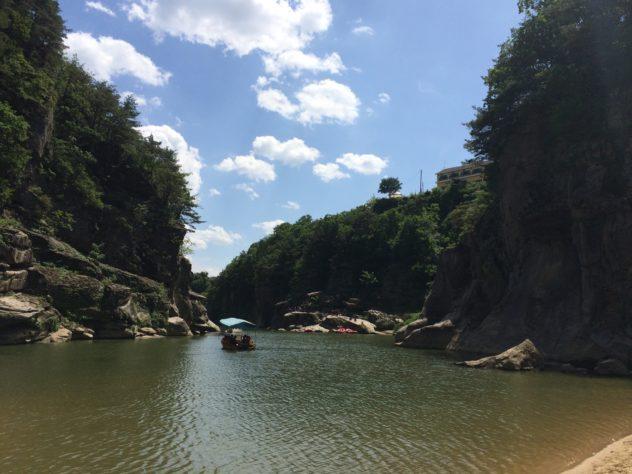
Many people come out to this beautiful little stop along the DMZ, with its many restaurants & prime picnic spots, and of course, a canyon. A flowing river fills the canyon, and there were people rafting & boating on the water, as well as climbing on the rocks below.
The weather was gorgeous when we went, just blue skies for miles, so we snapped lots of pictures and took in the view.
Cheorwon Peace Observatory (철원)
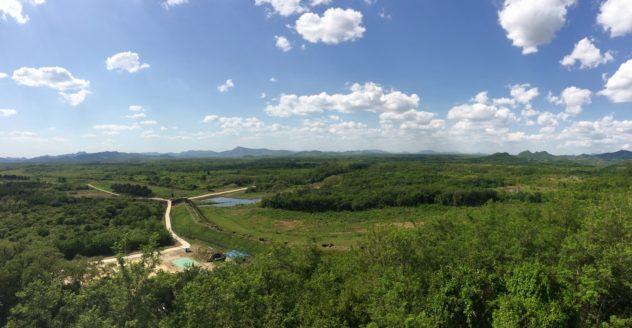
"The DMZ has become a wildlife sanctuary" is the phrase of the century here. I actually wish I had counted how many times the video they showed us mentioned that fact, true as it might be. We got to talk to the 20-year-old defector from North Korea who came on the trip with us, and answered all of our questions for about half an hour.
The over-the-top video also highlighted all of the parts of North Korea you can see from the outpost there, explaining all the signs we later noticed were telling us not to take pictures. It was not enforced.
White Horse Ridge (백마고지)
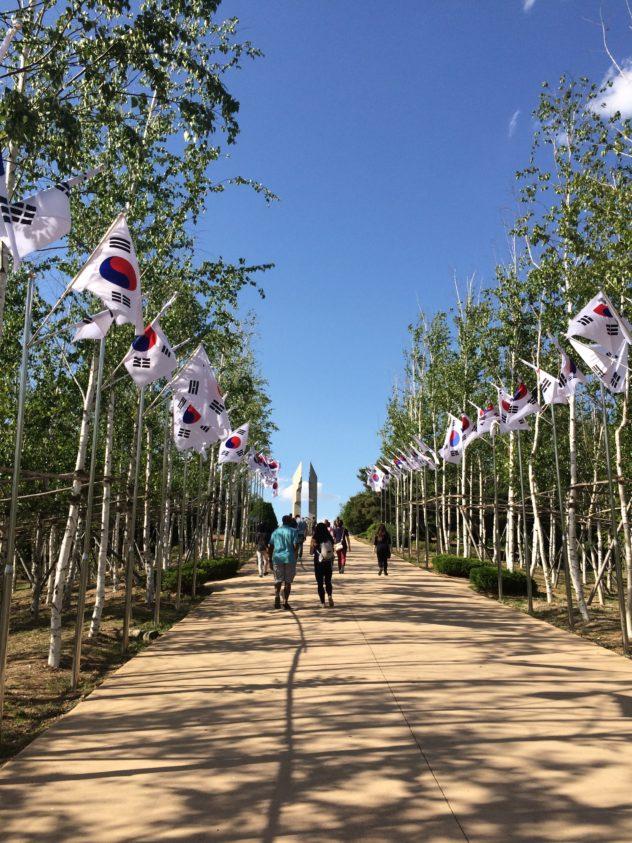
At our last stop we had a guide, who had obviously spent some time in Hawaii or the Philippines to study English, take us all around the small grounds of the memorial, explaining each statue and showing off what parts of the DMZ you could see from there. I think he got a pretty sweet gig for his 2-year mandatory service, if I do say so myself.
The area also had a museum (closed for construction at the time) dedicated to the pivotal battle fought there during the Korean War. It was all quite interesting, but honestly, I was so tired by then that I tuned a lot of it out. Regardless, the countryside was still damn impressive.
Overall Impressions of The DMZ
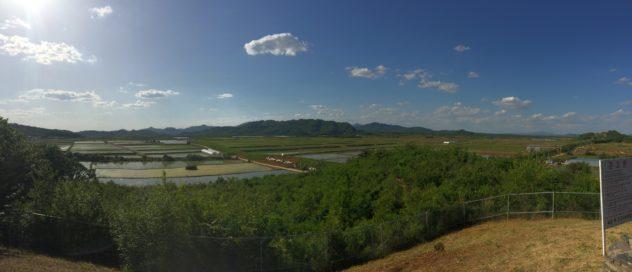
The border zone was so much bigger than I expected, with way more roads and wildlife (heavily advertised in the posters put in tourist hot spots) than you might think a military buffer zone would have. It always seemed to be one of two extremes: forested or barren, broken by the occasional fence or rice paddy.
Apparently the region is famous for its delicious rice, and with the importance of rice in the East Asian diet, it was therefore a divisive region during the war. What was surprising was that we were able to take so many pictures— most DMZ tours, to the main regions, allow you to take a scarce number of pictures at very specific locations.
We both learned a lot more on this tour than we expected, especially considering that the friend I went with grew up here and learned all of the history in school. There were things we might not have realized had we not been able to come, if I had refused to take a taxi & demanded a refund in protest.
Other tours probably don't bring along someone who grew up on the other side of the border, who learns as a kid that you can't defect from North Korea unless you have papers to move to a different part of the country and can then somehow cross the border directly.
Yet who, just a year and a half ago, we passed through twelve hands on her mother's behalf to get from her home in the countryside to the relative safety of South Korea. She met her first foreigner on one of these tours, and that this can still happen in the age of modern technology astounds me.
I am grateful to have had this experience, as nervous as it might have made my mother, and proud to live in a country with such a long history to preserve & strong morals to go to war to defend.
Have you ever visited such a seemingly dangerous place and just been underwhelmed?
Comments
No Comments