
After 3 years living in Korea, and now many more years living with KBBQ at home in my local Koreatown, I put together this definitive guide to hosting Korean BBQ at home. Over the years I've enjoyed Korean barbeque at dozens of restaurants, and tried some of the best meats in the world.
While dishes like gimbap, and tteokbokki are dominating the street food scene, sticky sweet Korean fried chicken and fare like bulgogi and galbi are probably more familiar to you. For those of us who love marinated meats and controlling the cook of our cuts, Korean BBQ is the promised land.
But can you recreate the Korean restaurant experience in your own home? In this article we cover the basics of making Korean BBQ at home, from the meats & marinates to the setup, sides, and sauces you'll want to prepare ahead of time.
I've included my best tips and tricks for hosting a fun KBBQ night at home with your friends and family; it provides a KBBQ grocery list, covers how to choose the right Korean BBQ meats, how to make a proper wrap, and more.
Jump to:
- 🎓 What is Korean BBQ?
- ❓ Basic History of Korean BBQ
- 🥩 Best Cuts of Meat for KBBQ
- 🔪 How to Make Korean BBQ (Recipe)
- 📋 Market & Equipment List (8 People)
- 🍴 Cooking and Cookware Needs
- 📝 Steps for Making KBBQ at Home
- 💡 Grill Time Chart (based on Medium Heat)
- ⭐ Etiquette for Eating KBBQ
- 😋 How to Eat KBBQ
- 🥘 Banchan (Korean Side Dishes for KBBQ)
- 🥣 Korean BBQ Sauces
- 🍶 Best Drinks for KBBQ
- ✔️ Tips for Making Korean BBQ at Home
- 🙋🏻♂️ Frequently Asked Questions
- 📖 Recipe
- 💬 Comments
🎓 What is Korean BBQ?
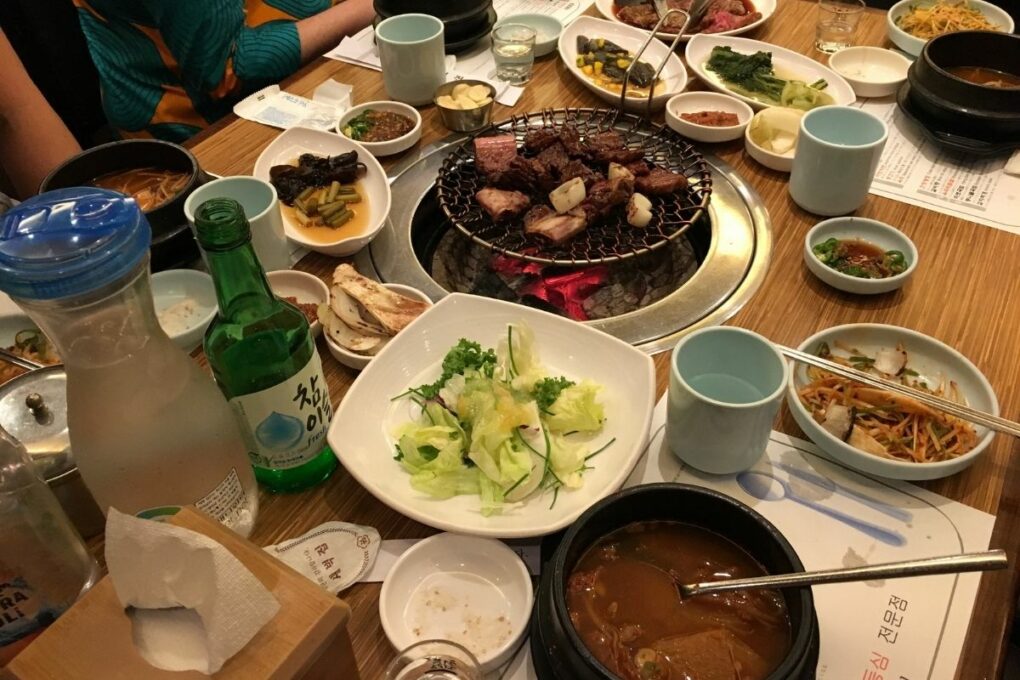
Korean BBQ is a social experience built around a central grill where you cook marinated meats, then feast upon each one alongside an assortment of side dishes meant to make each bite different from the last.
In Korea, eating is a social activity. From the school lunch room or your favorite café to having a staff dinner at a local restaurant, you can't eat without company. Korean barbeque is the ultimate expression of that, because in Korea, making KBBQ at home actually isn't very common.
This is because it's inexpensive to dine out and unusual to invite friends home. Most of the time people enjoy meals out over soju and various anju, like raw spicy crab, japchae, tteokbokki, and many more.
Unfortunately, when the pandemic hit, public gatherings were discouraged. But this didn’t stop people from buying portable stoves and stovetop grills to recreate this fun dining experience at home. These are central parts of the experience, because Korean BBQ is all about the grill.
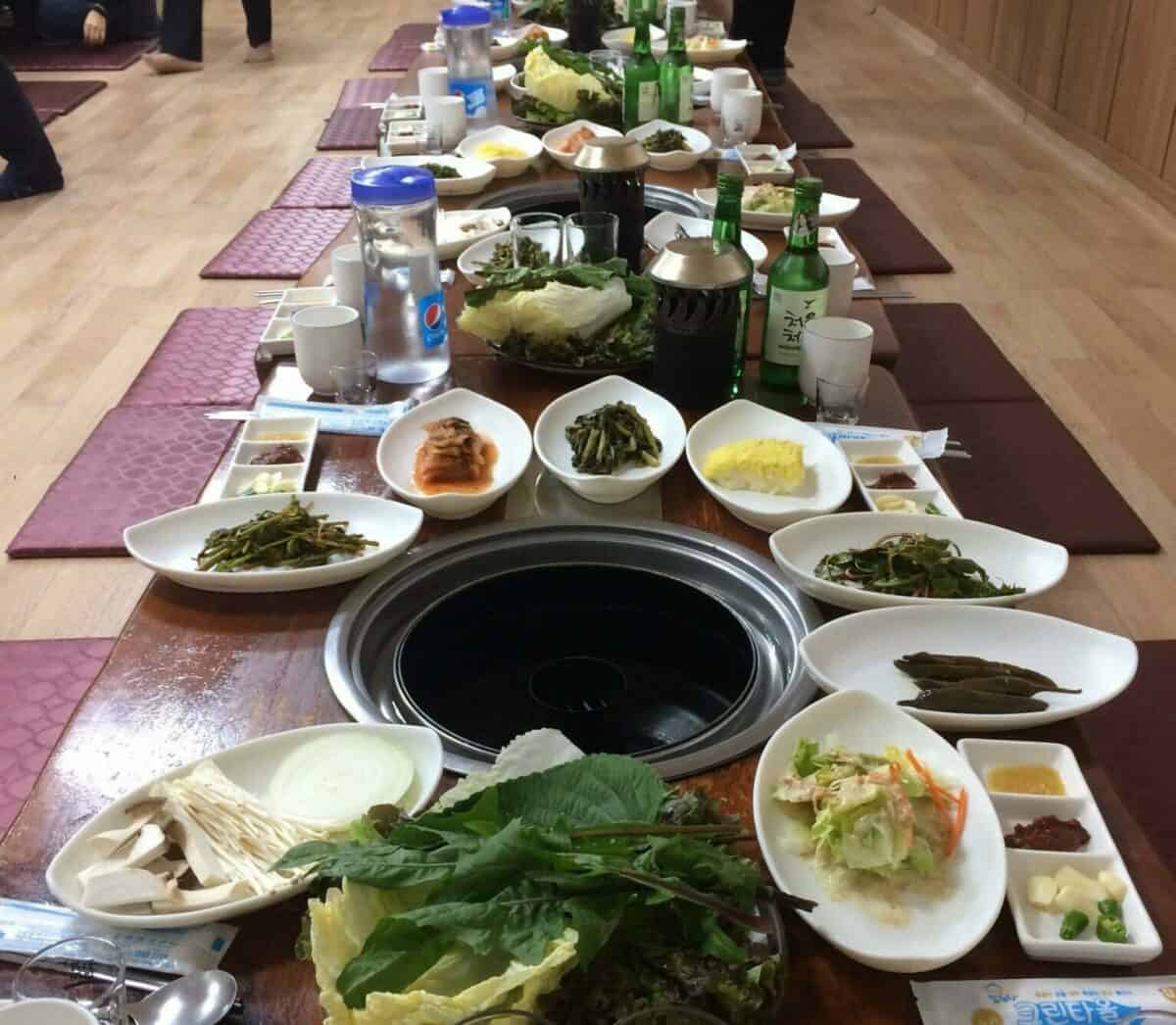
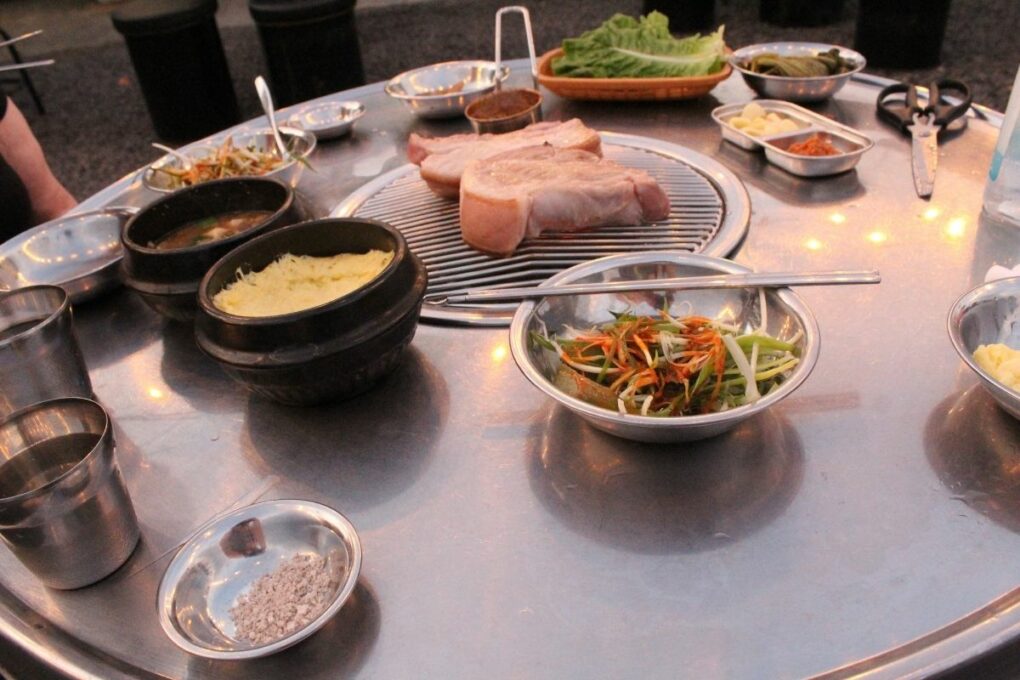
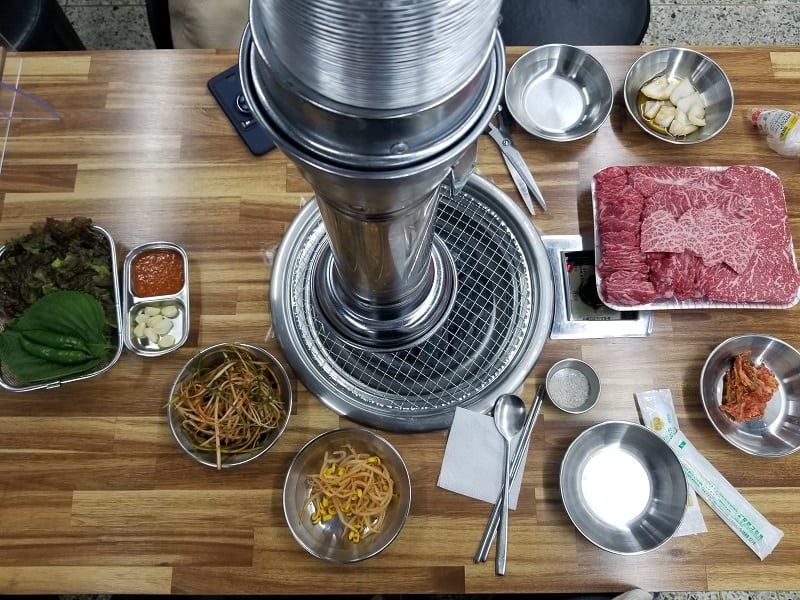
If you come to Korea, one of the first things you'll notice are restaurants with tables featuring large grills and tubes hanging above each one. Just imagine a long, thick silver tube coming out of the ceiling, settling just over your table; this is a vent meant for sucking up any smoke.
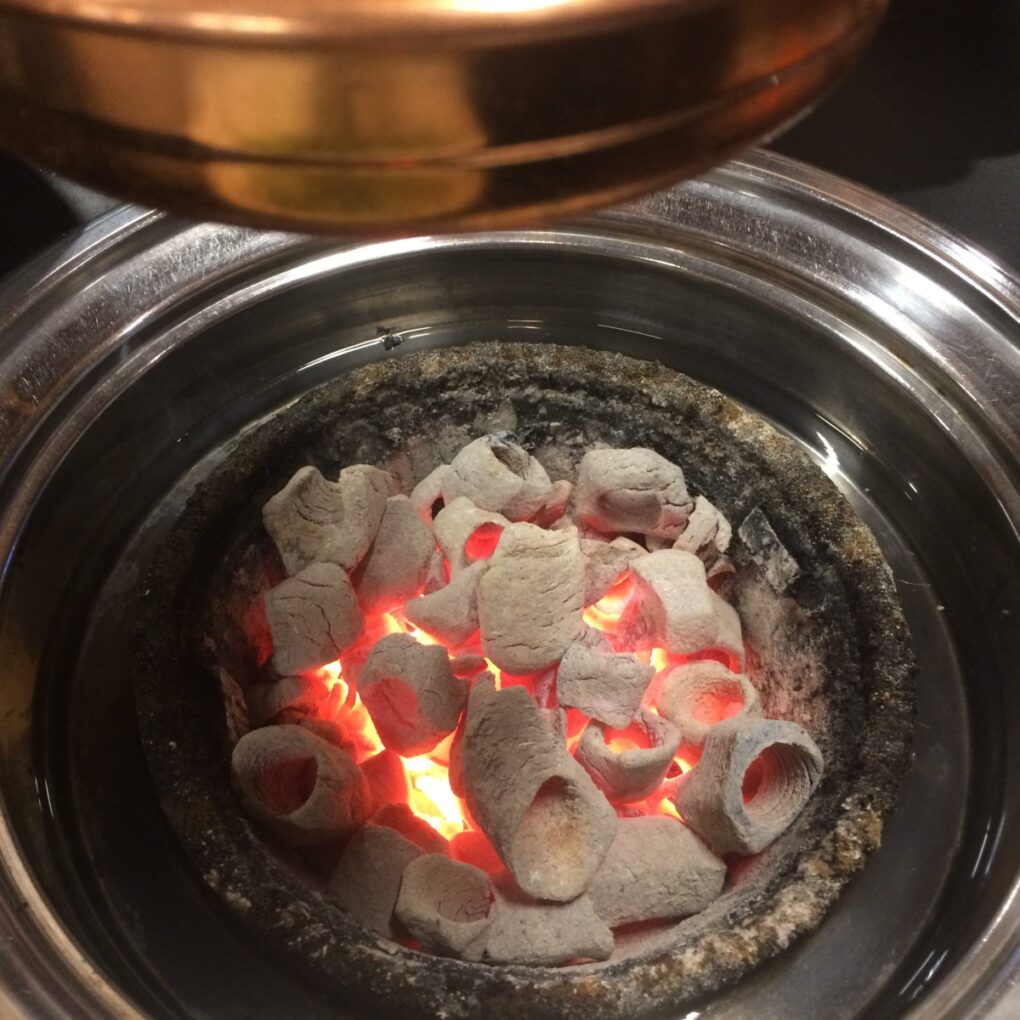
A traditional Korean BBQ setup will use a charcoal grill, though in the US most restaurants use gas grills, and that's by far the easiest to use when learning how to make KBBQ at home.
❓ Basic History of Korean BBQ
Historians believe that the Korean practice of grilling pre-seasoned meats (gogi-gui) originated with the Goguryeo kingdom's founding tribes (37 BC to AD 668). Roasted meat skewers called “maekjeok” created by the nomadic Maek tribe were popular, which eventually evolved into marinated meat called simply bulgogi (literally ‘fire meat’).
During the Joseon Dynasty (1392-1910), "neobiani," or thin, marinated and charbroiled beef slices, became popular among the royals. Through the Buddhist influence on Korean history and culture, a wider variety of banchan were introduced.
The tradition has been passed on for generations, allowing us to enjoy Korean BBQ in the present day. Popularized by the Korean wave, K-BBQ is now globally recognized for its particular idiosyncrasies.
Barbecue is not an everyday meal for many Koreans; it’s mostly eaten on special occasions, when there’s something to celebrate, a work gathering, or a reunion. Koreans enjoy it at restaurants, where there’s an open grill in the middle of each table, typically seating four people.
At home, a grill or portable butane stove can be shared by any number of friends and family, or brought along to make a feast for travels in camp sites or lodges. The traditional way of eating Korean barbecue is as ssam.
Ssam means "wrap," and it refers to the practice of wrapping bite-sized portions of meats and sides in lettuce leaves and other greens. After the meat has been grilled, the wraps are prepared one-by-one and eaten in a single bite.
Most restaurants will provide all of the necessary tools and ingredients on the table, such as meat scissors, a basket of lettuce, and a variety of side dishes and sauces. However, in some American KBBQ spots you may need to ask for the lettuce.
Korean barbecue is different from regular barbecue in that it’s a hands-on dining experience where you grill meat, vegetables, and mushrooms yourself. Hosting Korean barbecue at home is a casual yet communal experience that’s perfect for a Friendsgiving or just a Saturday night get-together.
Secondly, American cookouts revolve around large cuts of meat with a full-bodied smoky flavor, such as steak, sausages, ribs, and brisket. Korean BBQ, on the other hand, uses thinner and smaller strips of meat and fattier cuts - pork or beef belly, short rib, or brisket.
It can be marinated or left unseasoned, and you can dip it in any of the delicious Korean BBQ sauces, with an emphasis upon eating it with vegetables and rice.
This more balanced approach to dining is increasingly appealing to Americans, but even if you don’t have a KBBQ spot nearby, it’s totally doable to make Korean BBQ at home for that same family-style experience.
🥩 Best Cuts of Meat for KBBQ
Gogi gui is made with both unseasoned and marinated meats. Gogi is Korean for "meat," and gui is Chinese for "grilled." The best meat cuts for Korean Barbecue will usually have two characteristics - thin slices and a good meat-to-fat ratio.
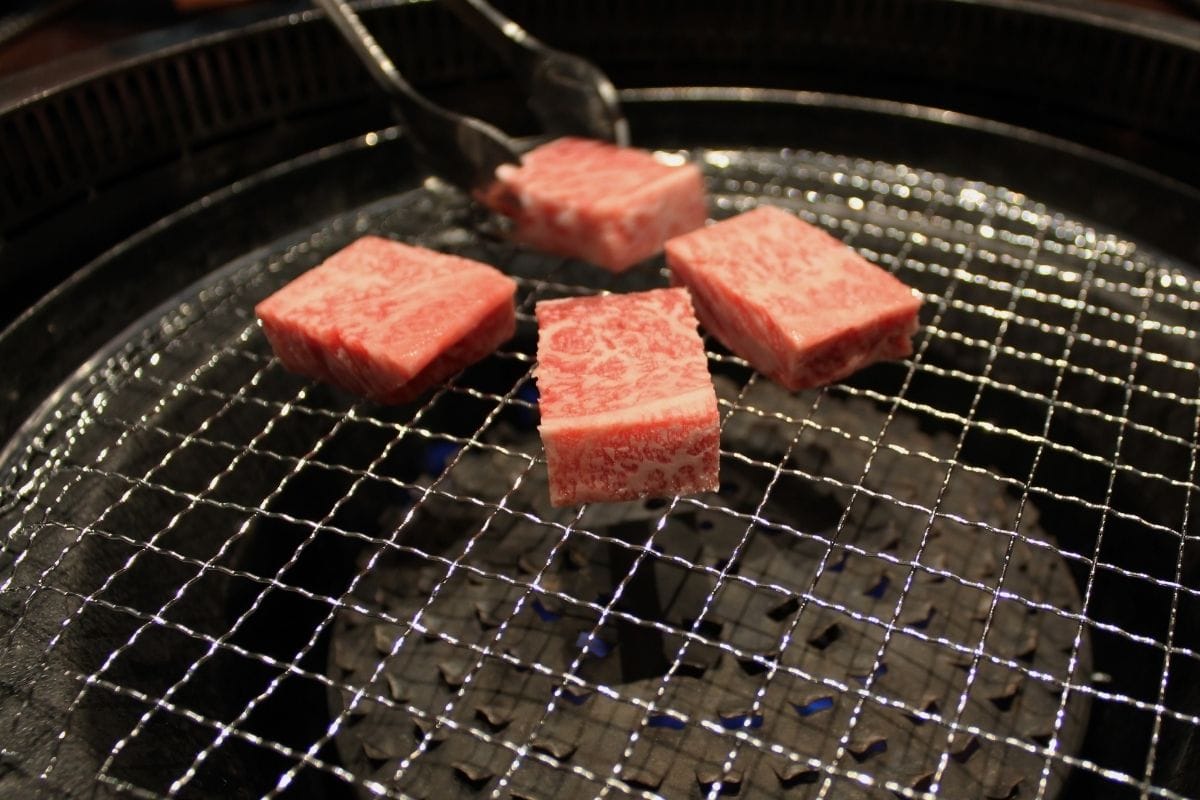
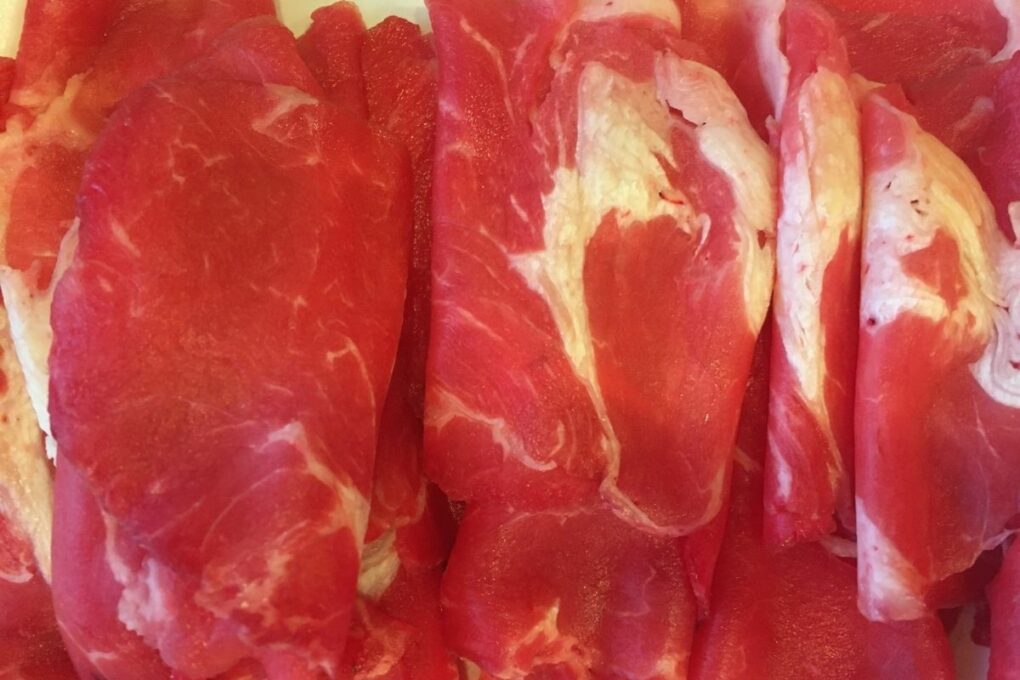
Meats with a lot of marbling and thinly sliced are ideal because they will cook more evenly on the grill, and the marbling will add flavor and tenderness to the meat.
Pro-Tip: if you and your friends tend to eat a lot of meat, then remember to look for KBBQ restaurants with a sign that says muhan lipil (무한 리필) just before it says 'kogi (고기)' in the menu. This means that it's all-you-can-eat, so you can order as much as you want without breaking the bank!
Korean BBQ meats can either be non-marinated or marinated. Non-marinated meats will give you the most natural flavor and the freedom to enhance it by dipping into the variety of Korean BBQ sauces available.
Marinated meats are popular for their distinct sweet & savory flavor, often made to pair with the restaurant's sauces. Marinades vary but the ingredients may include any permutation of the following: soy sauce, sugar, garlic, garlic, pears, red peppers (gochugaru), scallions, honey, and sesame oil.
To prevent the meat from sticking to the grill, spread some oil on it by rubbing one strip of meat on it before adding the rest. Overcooking premium meats would be a waste of money and an indulgent treat, so at restaurants you’ll note how much care with which they handle each cut.
With KBBQ it’s a given that you’ll end up eating at least some of the fat, so look for organic, grass-fed meats. I recommend serving choice cut non-marinated meat at your party for a true Korean BBQ experience, with an option (or two) of the marinated type (set to cook last).
Ultimately, the choice is up to you. Have a look at our list to help you decide what Korean BBQ meat cuts to buy.
Chicken
Dak Bulgogi
I tend to prefer to grill unseasoned pork and beef, while for chicken, marinated ones are the way to go. Dak Bulgogi is simply marinated and char-grilled chicken, with a spicy red sauce that offers an intense burst of flavor.
In Korean, bul means "fire," and gogi is a general term for meat. The marinade for the chicken is made up of chopped aromatics (garlic and onions), soy sauce, Korean rice wine, and sesame oil.
If you’re looking for a Korean BBQ meat that’s neither pork or beef, this is a good option.
Cheese Dak Galbi
Dak galbi or chicken ribs is a spicy stir-fried chicken dish made with bone-in or boneless chicken pieces. Dak refers to chicken, and galbi refers to ribs. The Korean BBQ version of the dish is that same chicken marinated in galbi sauce and then char-grilled; it's so popular that they even turned it into a ramen flavor.
Aromatics, various chili peppers, and gochujang add depth to the marinade, which is sweetened with Korean rice wine. While the sweetness helps to temper the heat, it’s still quite spicy, commonly enjoyed in Korea with a heavy serving of cabbage.
Hailing from Chuncheon, a city in the mountains east of Seoul, Dak Galbi istarts with grilled whole chicken thighs before cutting them into bite-size pieces. This method also prevents the chicken from drying out (as compared to the stewed version of the dish).
Other than cabbage, the spicy chicken dish is served with ooey gooey mozarella cheese. This river or layer of melty cheese with the chicken tempers the dish's spiciness.
This cheesy version is known as chee-juh-bap, or cheese rice. To make it, after almost all of the chicken has been consumed, it’s customary to stir cooked white rice with the remaining Korean dakgalbi cheese sauce.
Beef
Bulgogi
Bulgogi refers to the sweet and savory beef marinade rather than the actual cut of meat. Thin slices of sukiyaki, short plate, rib-eye, or sirloin are the typical cuts of meat for bulgogi, but they’re nothing until they’re dressed in the suace.
Soy sauce, sugar, sesame oil, garlic, pepper, and occasionally other ingredients such as black peppers, ginger, onions, red pepper flakes, or scallions are commonly used in the tantalizing savory sweet marinade. In addition, rice wine or Asian pear purée is frequently used to tenderize and further sweeten the meat.
It's one of the more expensive options for meat because it’s usually a good thin slice of beef with a marinade that caramelizes everything on the grill. However, the irresistible flavor makes the price worth every penny.
Galbi (Kalbi)
Galbi (LA-style), also written as kalbi, is another popular meat cut in Korean BBQ restaurants. It's a type of beef short rib is famous for being tender and juicy. These flanken-style beef short ribs are thin across the bone and are specifically cut for KBBQ, made famous in the city of Los Angeles, where they have quite a large Koreatown.
You can also ask your butcher to make boneless short ribs that are a little thicker in cut, for making galbi at home. Because beef is usually expensive, expect this to be one of the more expensive Korean BBQ meat options.
Contrary to the beef ribs, it’s already boneless and comes in marinated and unmarinated varieties. This cut of meat is ideal for marinating and grilling due to their increased surface area and thinness. The marinade is similar to bulgogi - soy sauce, Asian pears, brown sugar, scallions, garlic, and sesame oil.
It's a no-brainer in terms of taste and is quick to grill, so it’s one of the most popular meats for home KBBQ.
Yang Ji or Woo-Samgyeop
Yang Ji or Woo Samgyeop is tender thinly sliced beef from the belly portion. Also common for stews, it's another paper-thin KBBQ beef cut that’s simple to grill. These raw beef belly slices resemble rolled-up bacon slices when cut extra-thin.
They're relatively inexpensive for beef and ideal for those who dislike waiting for long periods of time or guessing whether the meat is cooked or not. The wonderful marbling of this choice K BBQ cut will provide a burst of flavor’ it comes pre-marinated or natural.
Ggot Deungsim
Instead of hanwoo, a high-quality Korean beef popular in Seoul, which is relatively scarce, you can grill tender premium beef cuts like ggot deungsim. In Korea, they treat themselves to this beef on extra special occasions.
Ordering it at a restaurant or buying it to cook at home is like giving yourself a food-fortified pat on the back, though it’s not for everyday feasting.
Ggot deungsim is a medium-thick cut of a premium rib eye. It’s smooth, juicy and with good marbling. The meat is grilled with just enough fattiness to lock in juices and flavor, and it has flavorful marbling. It’s slightly more expensive but chars beautifully when grilled at the table.
Chadolbaegi
Chadolbaegi is a popular side dish at Korean BBQ feasts. It is thinly sliced beef brisket strips that cook quickly on the grill, and they’re particularly common at all-you-can-eat Korean barbeque restaurants in Korea and in the States.
Unlike other grilled Korean meat favorites, the brisket is not marinated. Instead, it's grilled quickly and then dipped in a sesame oil, salt, and pepper sauce. I highly recommend dipping & eating these before they start to cool, as they get a bit chewy.
When preparing chadolbaegi for a Korean BBQ feast at home, freeze the meat ahead of time to prevent the fat layers from melting immediately, as happens more commonly with quality meats.
Pork
Samgyeopsal
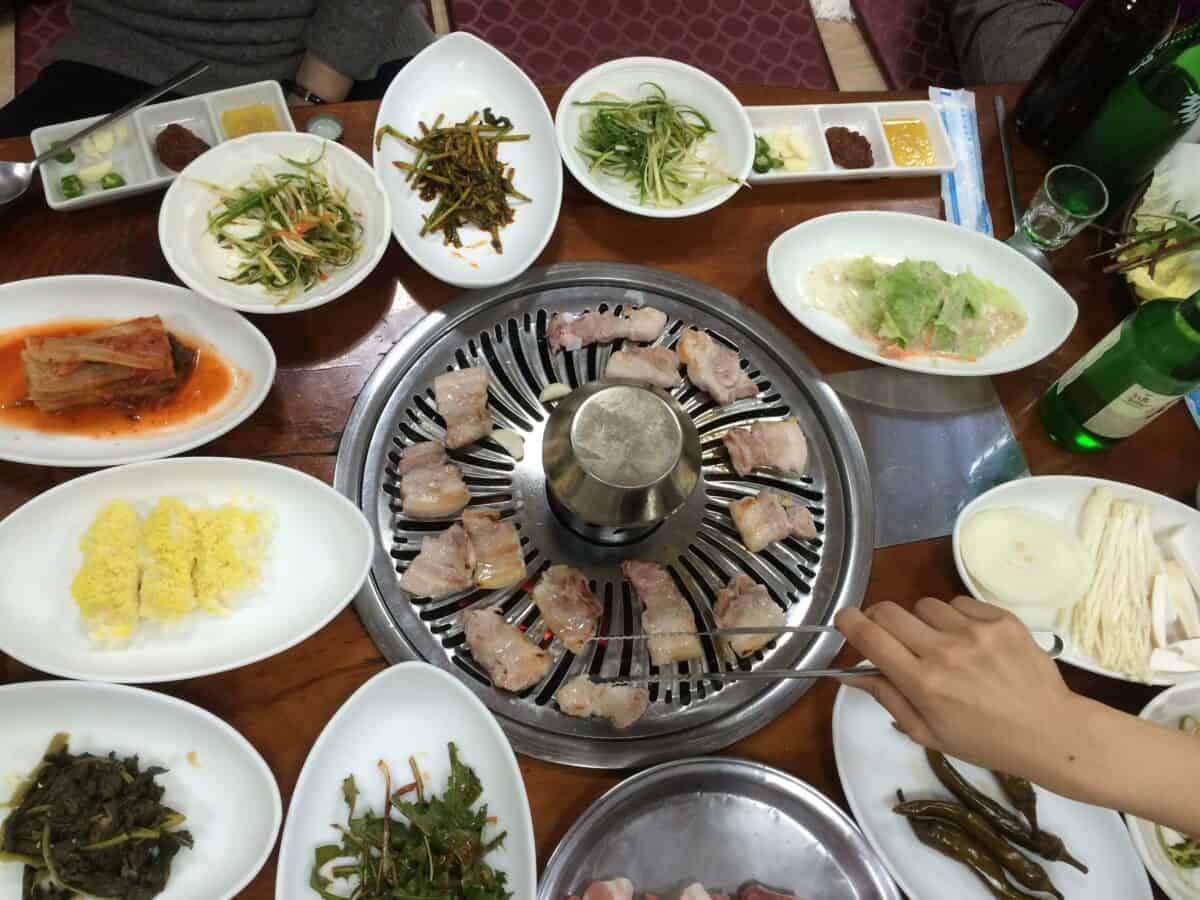
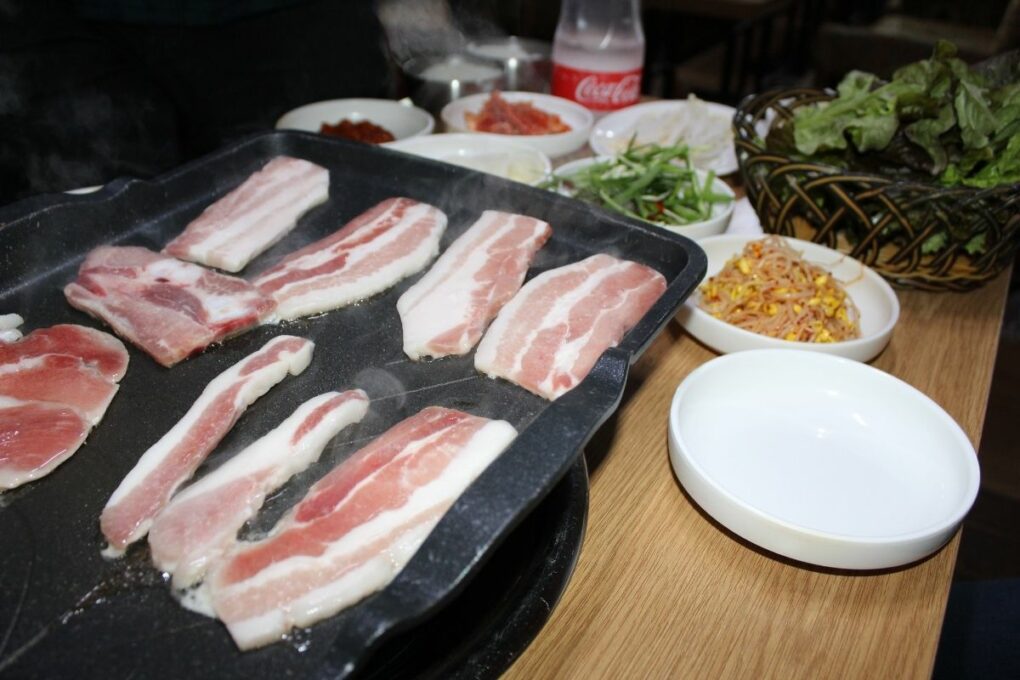
Arguably the most loved KKB meat, samgyeopsal is a ¼ inch thick cut of pork belly that is extremely juicy and flavorful. Pork belly is inexpensive and widely available in most supermarkets.
It can be grilled unseasoned or marinated in a special sauce. To enjoy the natural flavor of the meat, I prefer non-marinated samgyeopsal, which I then roll up in lettuce and dip in sauces.
Moksal
Moksal is another popular grilled pork cut. Moksal, also known as pork butt or Boston butt, is a Korean term for pork cuts obtained from the animal's neck (collar cut).
This tender, lean pork cut has good marbling and a tough, stiff texture, making it ideal for grilling. When compared to the popular samgyeopsal, moksal has more meat and less fat (pork belly). It is less expensive while still providing good flavor.
It requires more attention than samgyeopsal, however, as it will not taste good if you grill it for too long. It will become chewy and difficult to eat, so keep an eye on this particular K-BBQ meat.
Hangjeongsal
Hangjeongsal is a type of moksal obtained from the neck, specifically from the front of the neck and close to the shoulders. It is more expensive than moksal and, due to its tenderness & high demand, is considered rare.
It's the ideal blend of the two worlds. It has the marbling of a beef rib-eye steak, with just enough fat to soak up flavor without leaving your mouth feeling greasy. It has a firm bouncy texture and is boneless.
While slightly more expensive than other cuts, it is a good value for money due to its high meat-to-fat ratio. If you can find it, pick up a pack or two for your K BBQ home feast.
Gabeuri-sal
I need to add gabeuri-sal, or pork cheek meat, to the menu. Though it’s the most expensive pork cut, it is also one of the softest and most tender pork cuts available. It will easily burn, so keep an eye on it while cooking!
🔪 How to Make Korean BBQ (Recipe)
Summer isn't the only time of the year that you can throw a Korean barbque. In fact, Koreans tend to have it at gatherings year-round, on special occasions. In the winter it’s because the warm grill and soju shots help beat the sharp Korean chill, but in the summer it’s a favorite beachside activity.
Throwing a K-BBQ party at home is simple. It usually consists of buying marinated or unmarinated meats, banchan, and other Korean BBQ ingredients for sides like lettuce and other greens, and Korean BBQ sauces, setting up a grill and serving drinks.
Before I get into it, consider that there’s gonna be some investment involved because if you don’t have a table top electric griddle or portable butane stove, then you’ll likely have to get one on top of the ingredients.
Now that’s settled, there are three main things I want you to consider when throwing a K-BBQ night with friends - the space, the meal, and the setup plan.
Where to Cook
Designating a space for K-BBQ at home is important. Consider a well ventilated area in your home before discussing other Korean BBQ plans. Have it out in the garden al fresco, an open but covered garage, a roofed deck or even the upstairs balcony.
If you're going to do it in a small space, such as an apartment with no exhaust system or range hood, do it by the window and make sure all the windows are open. You must consider reducing the amount of smoke that stays in the room.
Oil the grill and start with the non-marinated meats first. When you go to a K BBQ restaurant, you'll notice that they have those exhaust systems that they pull down and back up to suck up all the smoke.
Be aware that despite popping windows or doors open, if you intend to hold the barbecue indoors, the smell will permeate into everything in the room (like your sheets and clothing).
When setting the table, typical Korean place settings are individual and compact - small plates, individual rice bowls, and small sauce dishes with just a pair of chopsticks and a round-faced spoon.
The Meal Plan
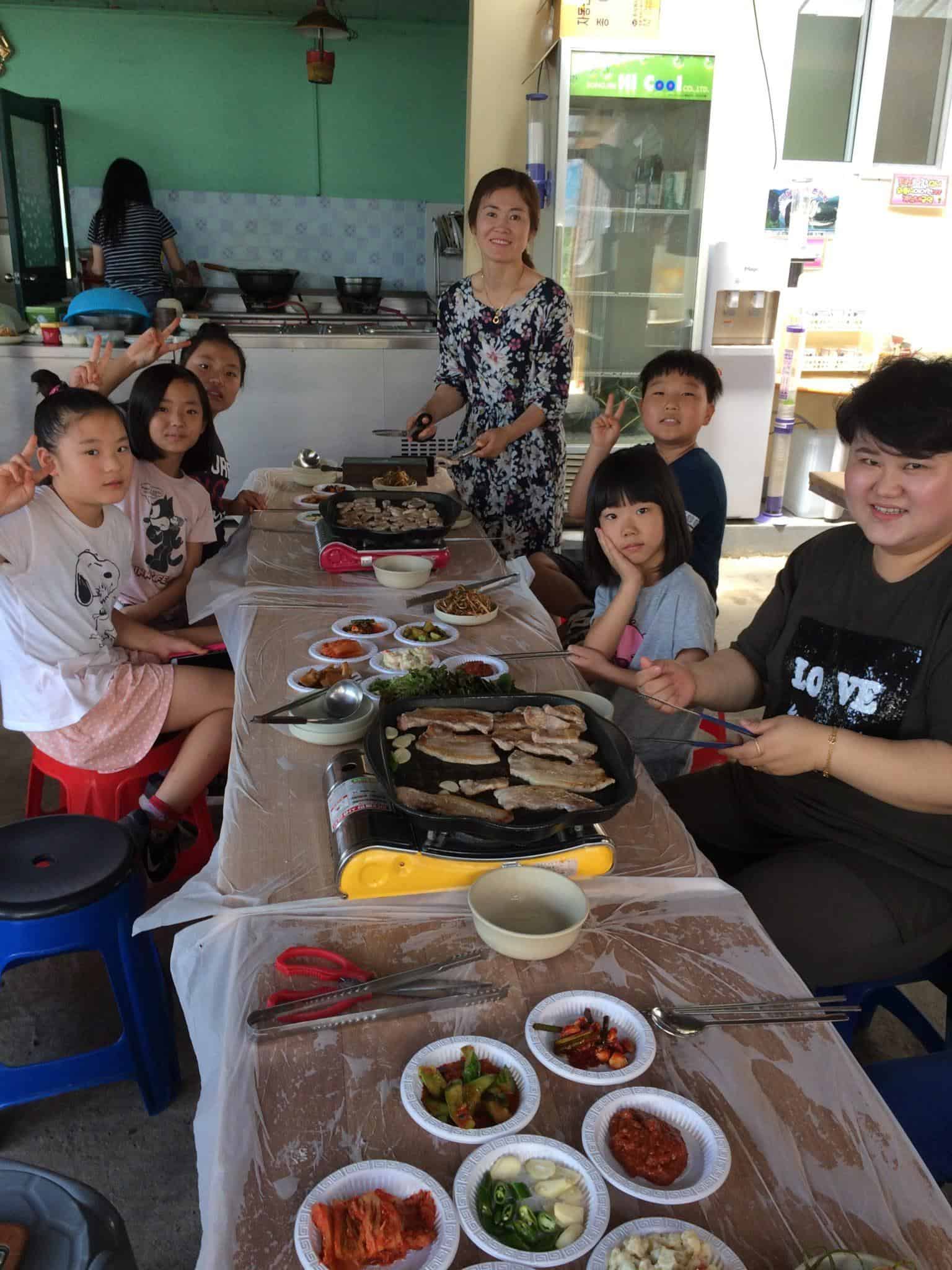
Korean barbecue is simple to prepare at home. Buy the ingredients, prep, then simply grill meat at the table. To eat it, place it in a leafy vegetable, top with sauce, and take a bite. However simple, it will serve you well to plan ahead.
Estimate the number of family members and how much meat they can consume. If you’re serving rice a pack (or two) of mixed greens for the ssam (lettuce wraps) will do. If people will be hanging out for afew hours before the meats are grilled, you'll also want to prep some Korean snacks.
Complete your ssam ingredients by pairing the grilled meats with at least three ban chan and a spring onion salad. Kimchi is a must! After this you can pick your favorites from seasoned spinach, cucumbers, caramelized potatoes, gochujang marinated anchovies, and more.
Purchase the necessary items on your list beforehand. Ideally you’ll want to do this a few days before the barbecue. After all, you don't want to have to run to the store at the last minute because you're out of meat, condiments, or other ingredients.
Korean barbecue is never complete without drinks. Soju is almost always ordered with the meal at Korean BBQ joints, most of which also stock flavored sojus. Therefore, soju (whether regular or flavored) is crucial for a home Korean barbecue.
Finally, end the meal with simple yet refreshing desserts. While many Korean barbecue restaurants don’t serve desserts, after all the heavy meats, a frozen treat or fruit sounds about right.
Consider serving seasonal fresh fruit with small toothpicks or grab popular ice cold confections like Melona bars, Samanco ice cream sandwiches or Together ice cream cups in true Korean fashion.
📋 Market & Equipment List (8 People)
Korean BBQ isn't complete without these components - meats, ban chan, lettuce, sauces, and drinks. Here’s an itemized list of what to prepare for Korean BBQ for a group of 8.
Meats
While the recommended average meat consumption per adult is 3-4 ounces (80-110g) of lean meat according to the AHA (American Heart Association), when it comes to Korean barbecue meat, assume roughly triple the portion.
You’d be surprised as to how fast a kilo of meat shared by four persons will go quickly. So triple up the meat quantity to ensure that no one’s left hanging.
- ½ Kg. (16oz.) Dak Galbi (marinated chicken thighs, boneless is best)
- 1 Kg. (16oz.) Samgyeopsal (non-marinated pork strips or preferred pork cut that hasn’t been marinated)
- 1 Kg. (34oz.) Bulgogi (marinated beef strips or preferred beef cut that has been pre-marinated)
- ½ Kg. (16oz.) Ggot Deungsim (non-marinated premium cut of meat for that something extra for the evening)
Banchan & Sides
As for sides it’s good to portion about a cup of lettuce, 1 bowl of rice, and a fistful of the sides per person.
- 1 large bag of Fresh Kimchi
- 1 large tub of Marinated Spinach
- 1 large tub of Soya Bean Sprouts or Stir-fried Fish Cake
- Spring Onion Salad - about 200 grams spring onion, 2 tsps. gochugaru, 1 Tbsp. toasted sesame seeds apart from pantry ingredients vinegar, soy sauce, and sugar
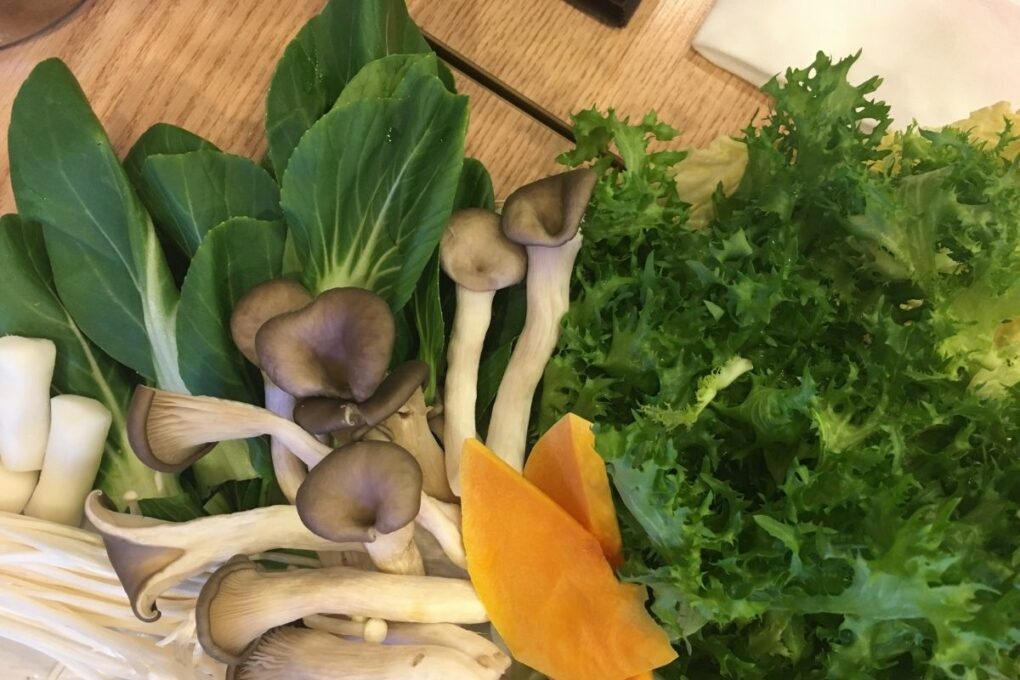
- A bag of Lettuce and other Greens. Any lettuce will do but I’d argue that red leaf lettuce is the most popular and best pick. Aside from red leaf you can pick up green leaf, butter, iceberg, Romaine, or bibb lettuce. If you happen to chance upon some perilla leaves at the grocery store, grab them, as they’ll complement the lettuce, which is the most authentic Korean way to prepare ssam.
- ¼ kilo (8oz.) Fresh Garlic (for the Spring Onion Salad and to grill or eat raw)
KBBQ Sauces
- A bottle of good Sesame Oil
- Kosher Salt
- Ground Black Pepper
- Ssamjang
- Gochujang Sauce
- Kyeoja (Sweet Mustard Sauce)
- Sweetened Soy Sauce
Cooking & Serving Items
- A handful of serving tongs, for each meat
- 4 platters for the grilled meats, a large bowl for salad greens, 3 small-medium bowls for banchan
- 8 X Chopsticks, spoons, chopstick rest (optional), small plate, and sauce dish
- Portable Stove or Tabletop induction stove
- Cast Iron Grill pan or Griddle (plus 1-2 changes of grill pan, depending on how much & what types of meats you'll grill)
- Kitchen Shears
- Shot Glasses or Cups
🍴 Cooking and Cookware Needs
Gas, charcoal, or portable stove grills are built into the tables of Korean BBQ restaurants but at home you’ll need a portable butane stove if you don’t have a barbeque grill.
For your soiree at home, opt an induction or butane stove are good options. Induction is safe to use and easy to clean, but the heat level is lower, so it will take longer to cook the meats. A butane stove is safe to use indoors and provides good heat.
Good quality grill plans are important. Look for a cast iron grill pan as it heats up quickly and cooks the meat more evenly. But anodized metal and ceramic pans can also be used as Korean barbecue grills.
The Setup Plan
When guests arrive, everything should be ready, especially you! It makes a huge difference in everyone's enjoyment of the cookout when all of the things you need for a Korean barbecue night are accessible on the table.
You don't want to be running back and forth the kitchen or guests showing up while you're still rinsing lettuce and peeling garlic. So before you start grilling, here are the items you should be doing a day ahead and on the day of the barbecue.
To-Do List
A day ahead of the barbecue:
- Prepare your meats. If anything needs to be marinated, do this a day prior. While you can certainly prepare this on the day, the flavors really get into the meat overnight (but don’t marinate more than 12 hours, so if you’re having an evening soiree, I’d prep your meats first thing in the morning). You can make your own marinade by following this simple recipe or buy any of the available marinades (like CJ Bulgogi marinade or Bibigo barbecue sauce) in your nearest Korean grocery store.
- Cook dishes or side dishes ahead of time. There’s surely a neighborhood auntie or uncle you can rely on to buy homemade ban chan from. If unlucky, hit the nearest Asian store for your banchan and other KBBQ ingredients; in Korea there are even special stores for people to buy their banchan.
- Place soju in the fridge to chill.
On the day of the barbecue, here’s the list of things to do morning-of so that all that's left later is to grill, eat, and enjoy.
- Prep the vegetables by washing, rinsing and drying them. Cut the lettuce to an ideal size, about the size of your palm, for easy ssam making. Then put them in a large bowl, one on either end of the table for large groups.
- Plate your meats separately. Don’t mix them together to prevent cross-contamination. Cover with plastic wrap and pop in the fridge until ready to grill.
- Cook rice.
- Lay out the ban chan (side dishes) in small serving ware.
- Prepare the sauces. You can serve them in their container or ladle them in cute ceramic bowls for everyone to help themselves, buffet style. Likewise, you may portion them individually and put them in front of each place setting.
- Set the table. Stack small plates, chopsticks and spoons.
- If you’re using bone-in meats, place ‘bone bowls’ evenly on the table so that everyone has a place to put their spent ends.
- Prepare your grill or hot plate. Brush the grill with oil.
- Open the windows if you’re inside the house.
- Put the soju in the freezer a few hours before dinner.
Now you’ve made sure all of the KBBQ meat is ready to go on the grill. If anything’s missing, just sit back and relax. This next section is all about helpful tips for being an expert K-BBQ griller.
📝 Steps for Making KBBQ at Home
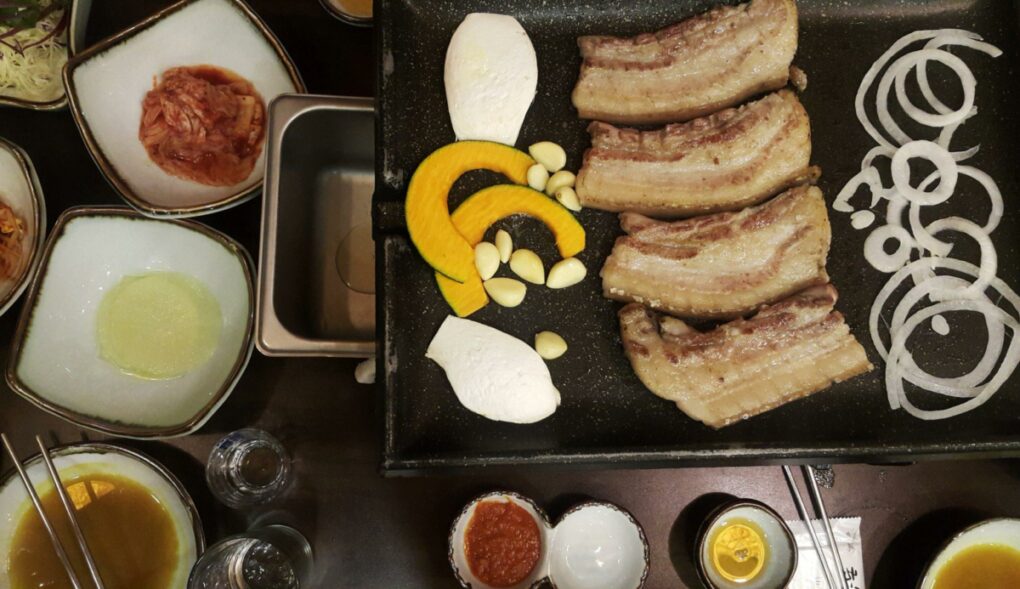
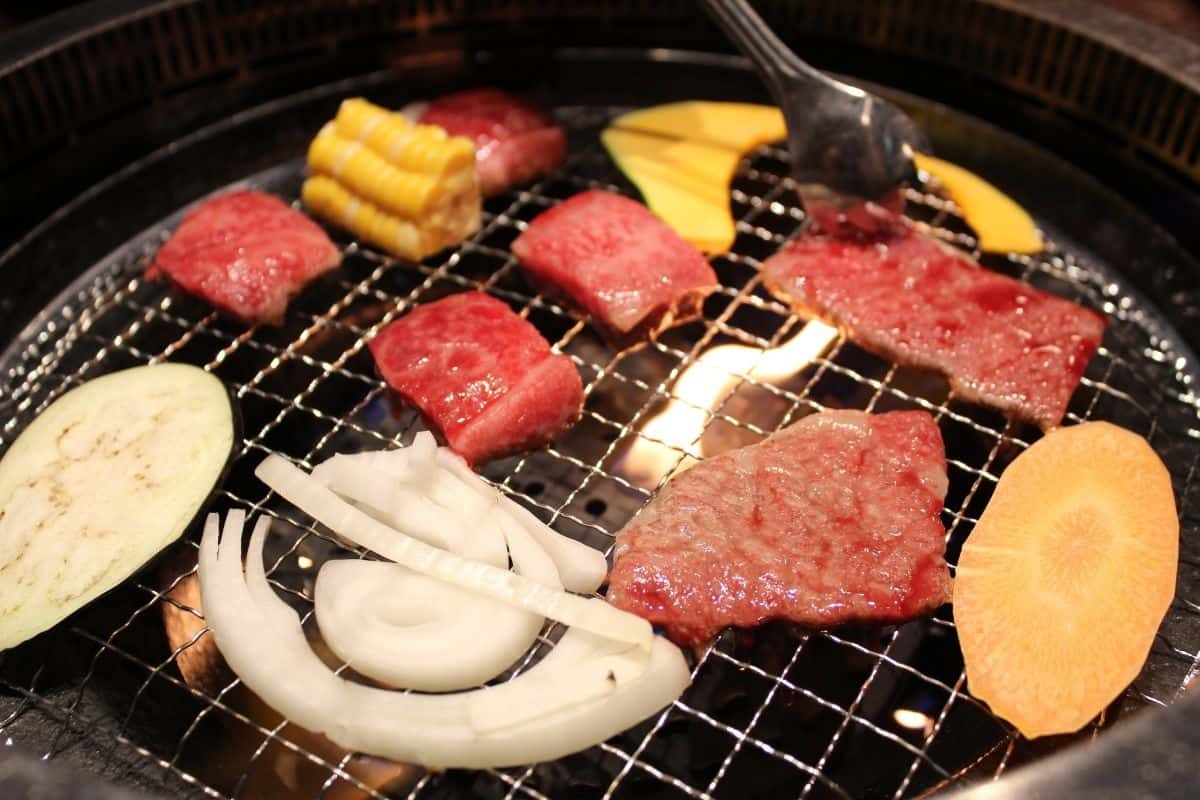
- Turn on the grill to medium, then brush the grill with oil if you haven't already. When the grill plate is hot, use a fatty meat part or an onion to spread the oil evenly so that the meat will not stick to the pan.
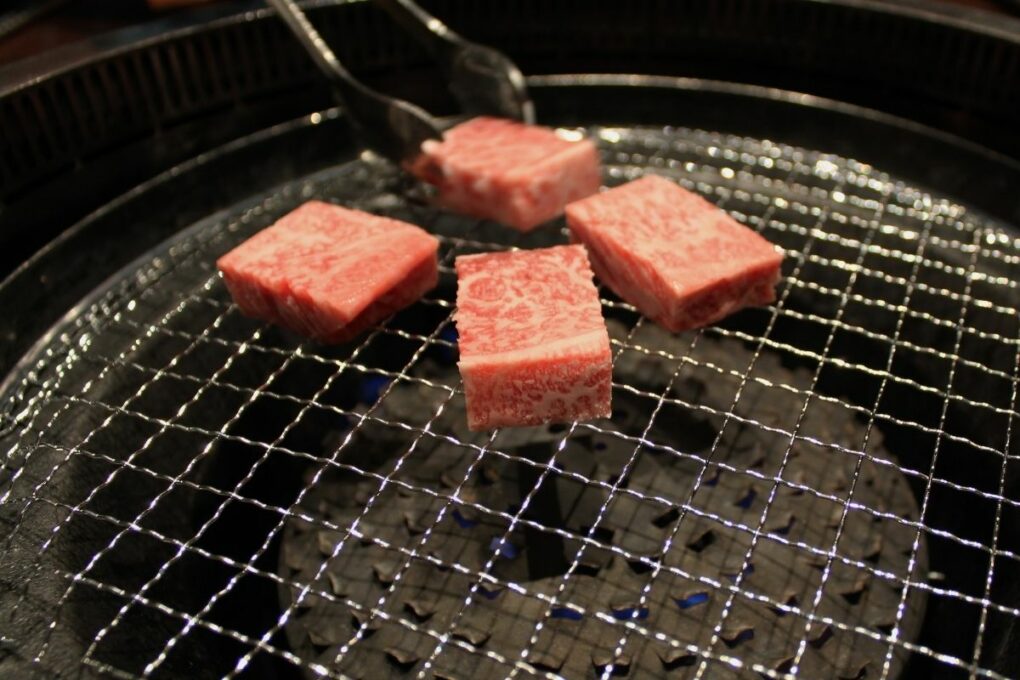
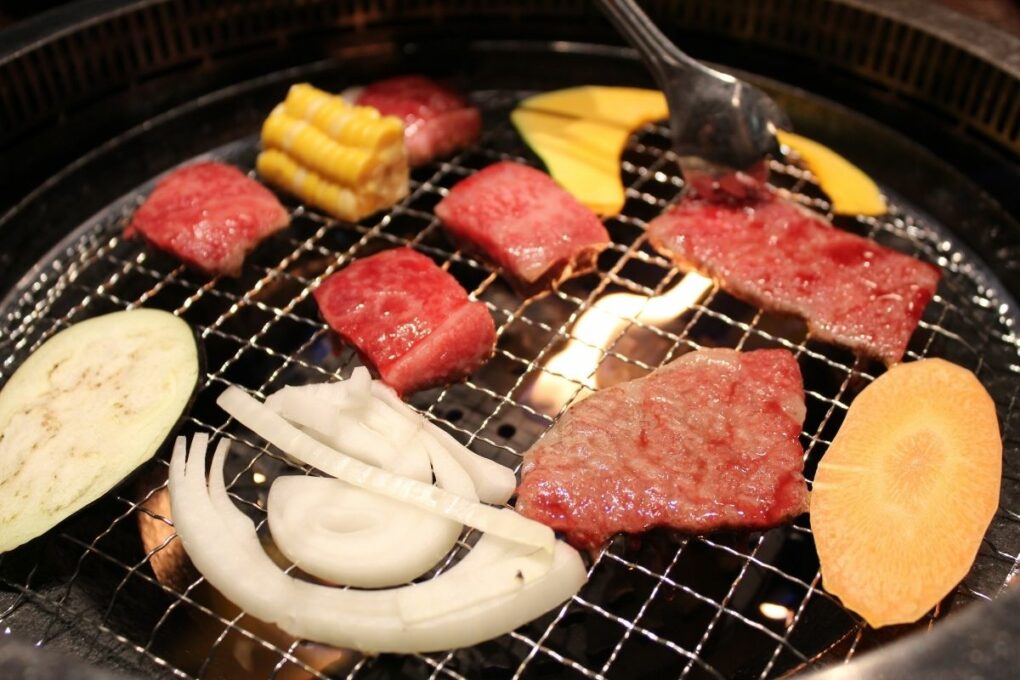
- Put your vegetables on the grill first because they take the longest to cook. Then add some meat slices. Start with one kind at a time. Cook the non-marinated meats first, and end with the marinated varieties to minimize smoke. Arrange the meat pieces on the grill, making sure they're evenly spaced. You can cut large slabs of meat before or after cooking, depending on how you prefer your meats.
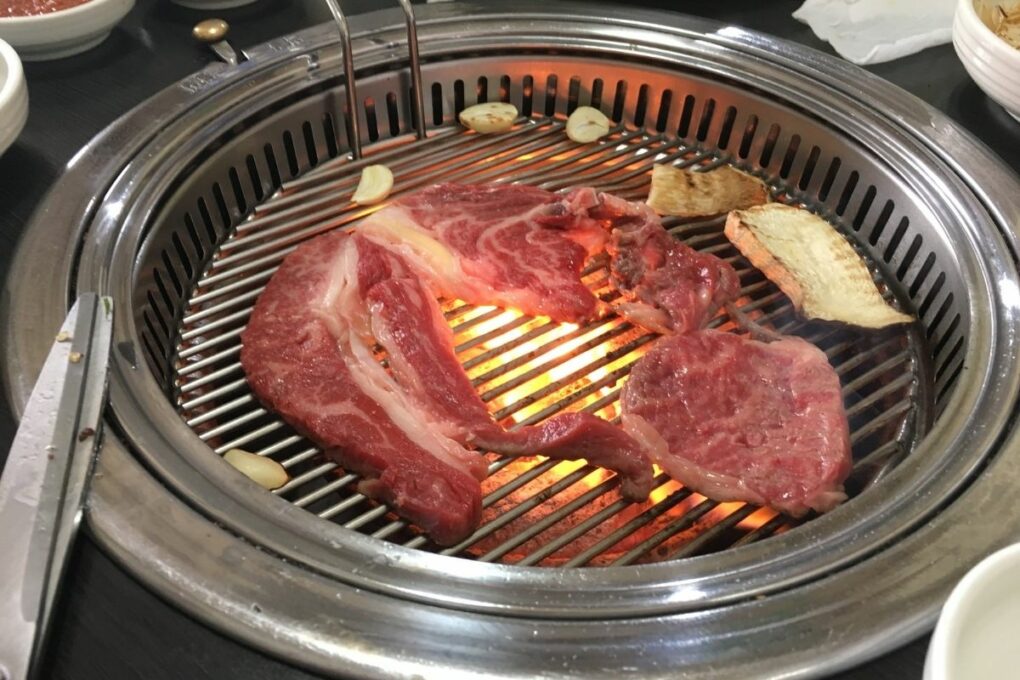
- When cooking thin slices of meat, like bulgogi, leave them alone for a full minute before you start to flip. This allows the juice to lock in the meat; you’re not meant to move them around like when you’re sauteing.
- When you notice the top of your meat is starting to sweat or slightly starts to become charred (only recommended for extremely fatty cuts), you can flip them. Don't be that person at the table who flips their meat more than three times - Koreans firmly believe that grilled meats should be left alone to cook nicely. Otherwise, your juicy cuts of beef, pork, or chicken will become rubbery jerky.
- After another minute, check to see if your meat is cooked through. If you see that it needs more time, flip it again a final time. When cooked, the meat has a nice char and it’s time to take the pieces off the grill.
- Portion the meat into small plates by using kitchen shears to cut them up. You can cut them directly onto a platter or serve onto individual plates. If there are burnt pieces, you can snip them off at this point, too. If you’re using bone-in meats, you can snip these directly into the bone bowls. It’s best to enjoy K-BBQ as soon as they’re cooked so don’t cook a lot at one time. This also keeps the grill pan from emitting too much smoke.
- Continue this process with the rest of the meats; it’s good to have a back up hot or grill plate if it gets too smoky. If you have a large enough grill, you can set aside some meat pieces on the edges to keep warm, and do the same with basically any vegetable.
💡 Grill Time Chart (based on Medium Heat)
| Chicken Thigh Filet Cut ups | 5-6 minutes on each side |
| Pork, Thin Slices | 1-2 minutes on each side |
| Beef, Thin Slices | 1-2 minutes on each side (medium doneness) |
| Seafood | Shrimp: 2-3 minutes on each sideSquid: 2 minutes on each sideFish: 4-5 minutes on each side (cut in inches)Scallops: 2-3 minutes on each side |
| Vegetables | 3-5 minutes |
⭐ Etiquette for Eating KBBQ
- Use your hands to grab leaves to prepare ssam and chopsticks to take the rest like meats and side dishes.
- Offering food to a loved one is a common way Koreans show affection while eating. Preparing a ssam with a premium cut of meat and giving it to a special someone is a sign of affection in their culture.
- Never pick up a bowl of rice or side dish to eat from it. It’s generally considered offensive.
- When there is an elder dining with you, wait for the elders to lift their utensils before beginning to eat. This shows respect.
- Sticking your chopsticks straight up into your bowl of rice is considered unlucky because it resembles a symbolic offering to deceased ancestors. Place them on top of your rice bowl or use them as a chopstick rest (which is why I included it in the KBBQ checklist).
- For Koreans, drinking together can foster social and work relationships, and express gratitude to friends or coworkers. So when a drink is offered at a team dinner, new workers, or young workers can’t refuse.
- Finally, only take what you intend to eat because it is considered respectful in Korean culture to finish all of the food on your plate. My elementary schoolers were even required to show their teacher their mostly-empty lunch plates before they could go to recess.
😋 How to Eat KBBQ
Korean barbecue is all about contrast and balance of flavors and textures. It's completely customizable, allowing everyone at the table to eat whatever they want. Everything is savory, smoky, and delicious.
There’s no one way to eat Korean barbecue. If you’re a rice and meat person, feel free to eat it on a plate. But part of the experience is eating it like the Koreans do! The traditional way of eating Korean barbecue is eaten by hand, ssam style.
Raw meats are displayed at the table. You’re going to grill them up, then wrap them in lettuce, dip or top them with Korean barbecue sauce, and then eat them. Grill, wrap, dip, eat, and then repeat! Somewhere in there, you take a sip (or a shot) of soju.
Serve the eldest people first, and then put meat on your own plate last.
You'll want to order a modest amount of meat to start, and order more if needed. Outside of Korea you may need to order all your meat at once, so to get the proper portions of Korean barbeque meat per person, make sure to ask how much comes in each order & get 200-300g per person.
When ready to eat, Korean BBQ is not authentic without the ssam. Newbies to Korean cuisine or Korean cooking tend to overload their lettuce and dip their ssam into too many of the Korean barbecue sauces, but this can destroy the taste and the experience.
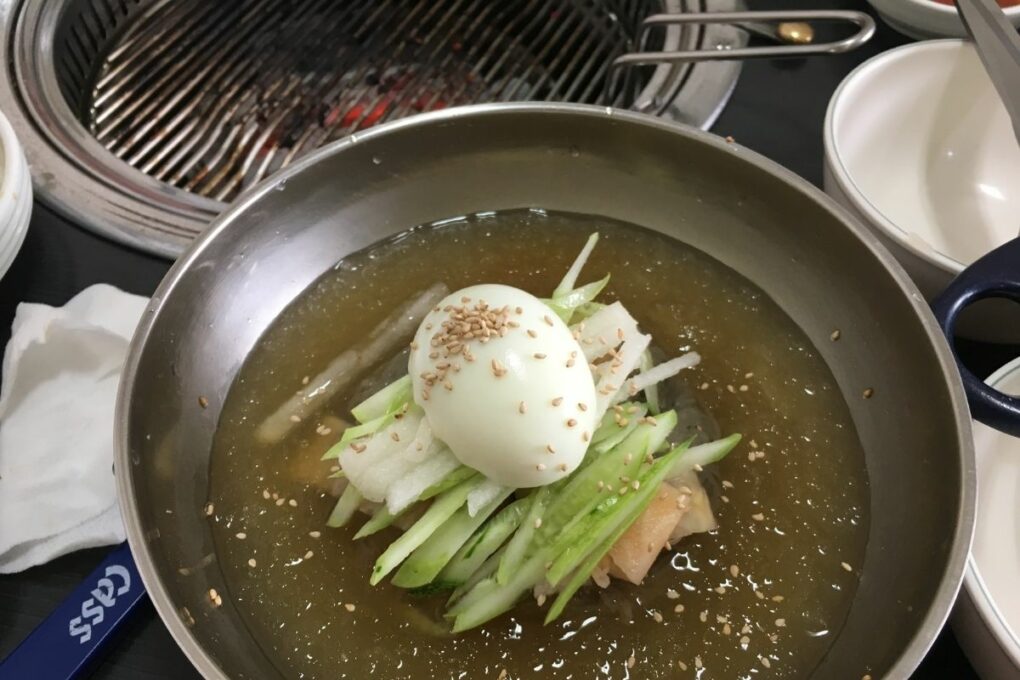
After eating KBBQ in Korea, my co-workers always told me that the meal isn't complete unless you enjoy a bowl of rice or stew afterwards, preferably dubu jjigae (tofu stew). I was always too full, but occasionally I would indulge in my favorite cold noodle soup alongside the piping hot grilled meat.
The soup is known as mulnaengmyeon ('water cold noodles') and can be ordered while or after grilling meat or seafood.
The Proper Way to Make Ssam
Ssam is the traditional way to eat Korean BBQ. This Korean dish simply means wrap, usually a piece of grilled meat such as beef or pork is wrapped in leafy vegetables like lettuce and perilla leaves. I've always affectionately called these Korean tacos.
- Grab a lettuce leaf and place it on your palm to make ssam. Add a perilla leaf or a thin piece of pickled radish, if it's available.
- Pick up a grilled piece of meat with your chopsticks and place it on top of your lettuce.
- You can season with sauce, garlic, kimchi, or pajeori.
- Place your chopsticks on the rest.
- Then wrap and roll the ssam using your fingers.
- Finally, pop the entire morsel into your mouth for a smoky, juicy, fresh explosion of flavor.
The trick to making good ssam is not to overstack, and overfill the lettuce wrap. Take it easy on the meats, sides, and sauce.
Make ssam more enjoyable by adding kimchi and rice in the wrap. Other ban chan can also be added to improve the texture and flavor of ssam, and can even be roasted on the grill beforehand (grilled kimchi is actually fantastic).
Spicy cucumber salad makes an excellent accompaniment to beef bulgogi, while pickled radishes pair well with dak galbi. Spicy green onion salad is excellent with unseasoned samgyeopsal.
If you prefer adding the sauce rather than dipping it, ssaamjang should be your sauce of choice. Its clumpy texture will fit right in and cling to the other ingredients instead of sesame oil which may run and ooze out before you even get to take a bite. Another less common alternative is kyeoja, a sweet and tart mustard sauce that cuts right through the sweetness of any marinated meat.
Pre-made ssamjang is available at many grocery stores these days, but you can buy freshly made sauce from a Korean grocery store or online. The taste of fresh, home-made ssaamjang is unbeatable.
No matter which greens you choose, the leaves will highlight the smokey and savory flavor of your grilled meat. It's an equally important part of ssam bringing a fresh, crisp bite to the wrap, not to mention health benefits.
🥘 Banchan (Korean Side Dishes for KBBQ)
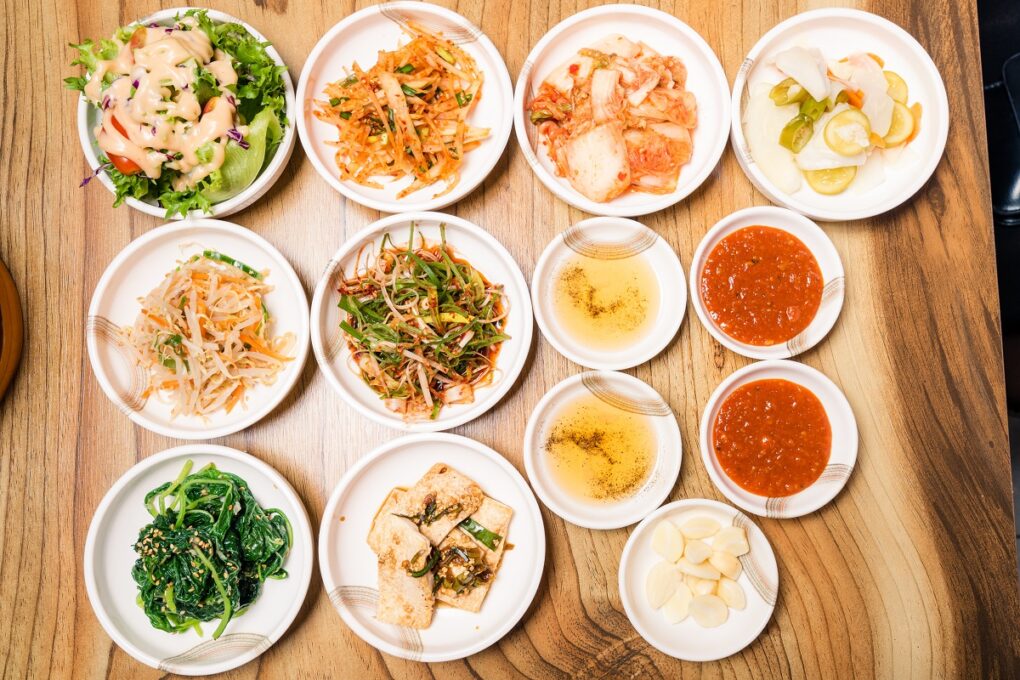
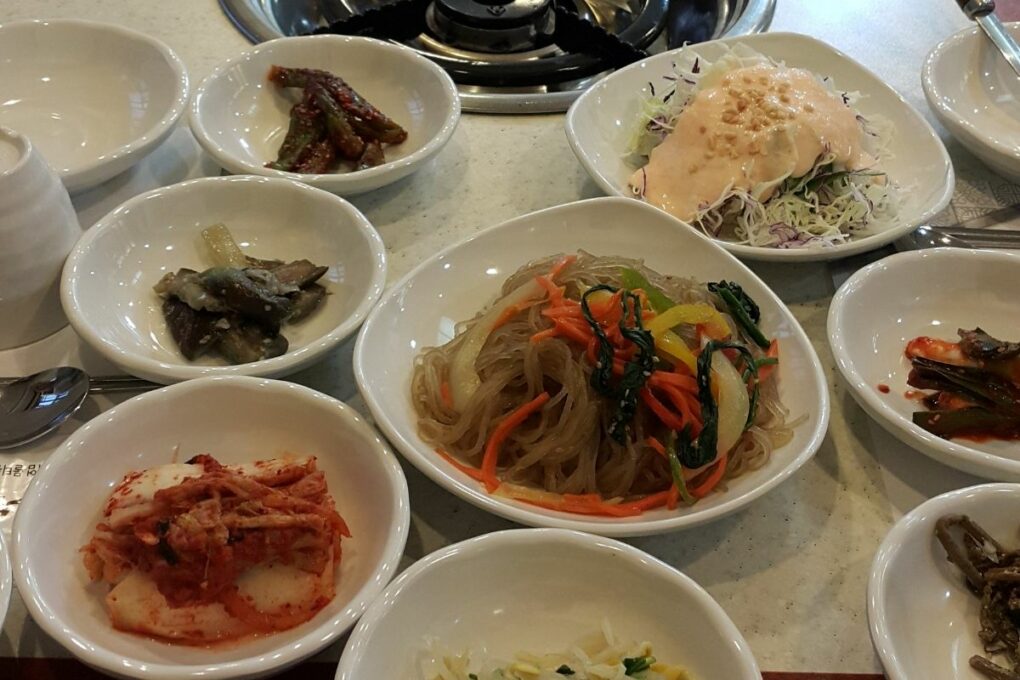
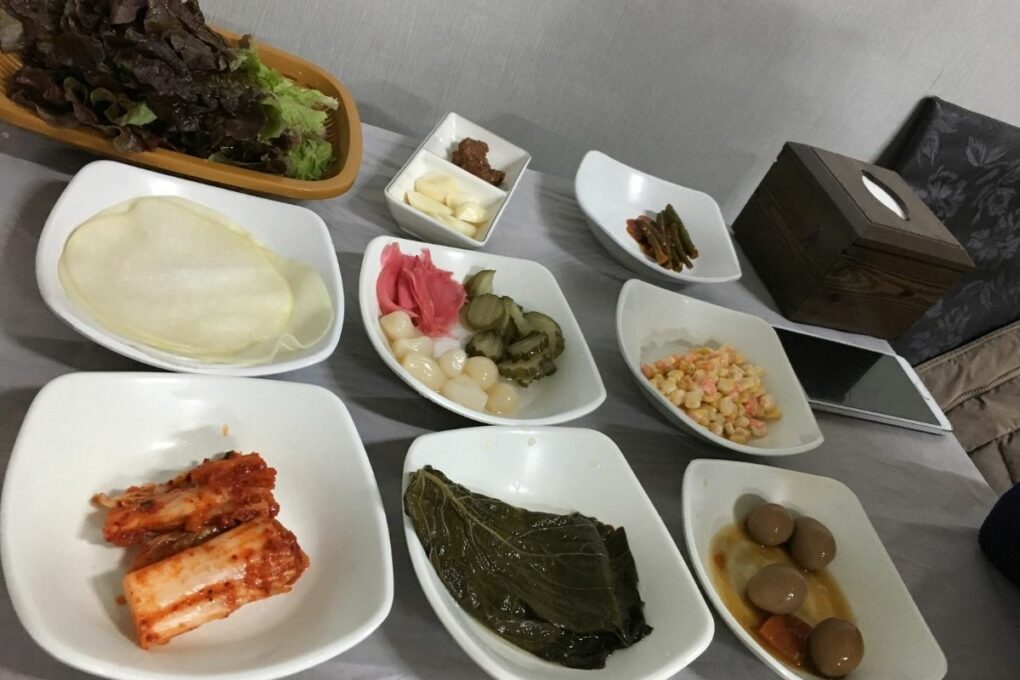
When you go out for KBBQ, you may be familiar with the bunch of tiny plates served as you make your order. These are banchan, traditional Korean side dishes that go well with Korean BBQ.
Side dishes vary by restaurant, but the staple ones include a type of kimchi (fermented napa cabbage), and seasoned dishes like spinach (Sigeumchi-namul) or soy bean sprouts (Kongnamul muchim). The best part? You can ask to refill your side dishes whenever you run out.
Banchan comes in all colors and flavors but they’re typically small. For hosting a Korean barbecue at home, have at least three to four sides including kimchi. Here’s a short list of popular ban chan to include in your menu:
Kimchi (김치, Fermented Napa Cabbage)
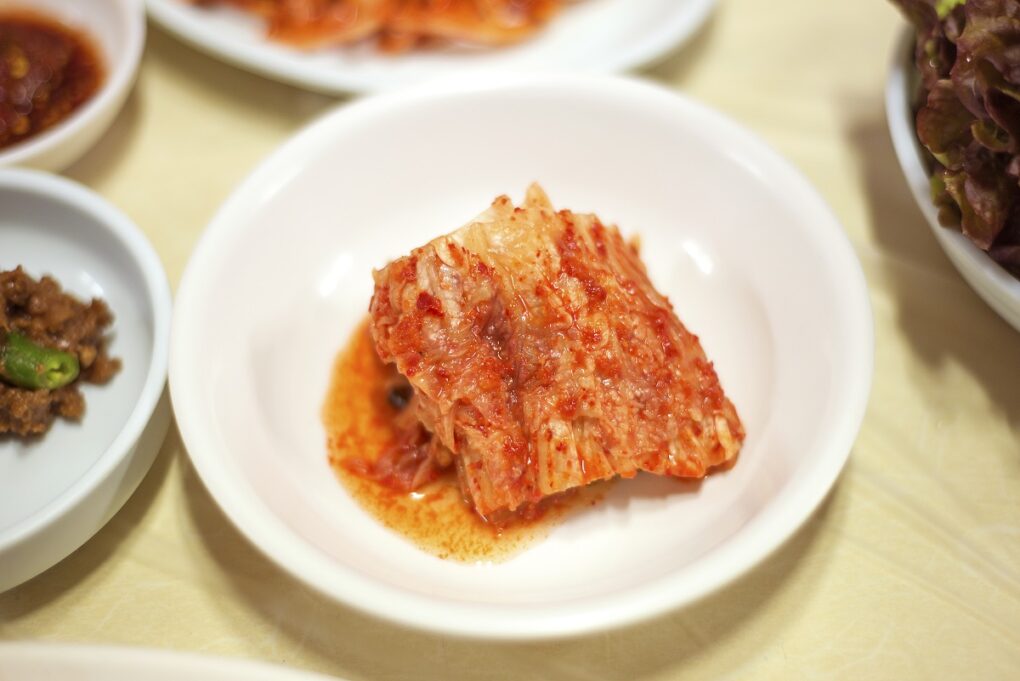
Kimchi is a staple in Korean cuisine and is served with almost every main course. Every year, Koreans consume nearly 2 million tons of this popular side dish.
I’is a traditional side dish made of salted and fermented vegetables, most commonly cabbage, but radish, scallions, bok choy, and cucumber can also be used. The chosen vegetable is then left to ferment after seasoning with chili powder, scallions, ginger, and garlic.
Kimchi gets its sour, salty and umami flavors, as well as its sharp acidity, from fermentation. Other flavors, such as sweetness and tanginess, emerge as you chew the vegetables. All of these will greatly enhance the grilled meat. I’ve been told many times over the years that "in Korea, it’s not a meal without rice and kimchi."
Pajeori (파절이, Spicy Seasoned Green Onion Salad)
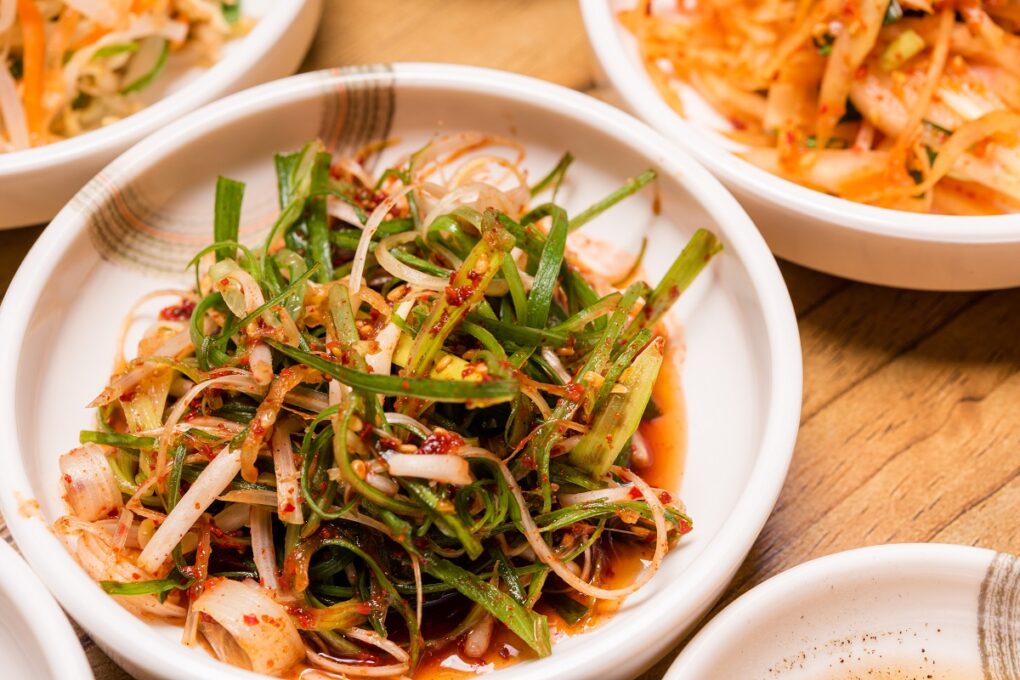
Pajeori, also known as Pa muchim, is a spicy, seasoned green onion salad. Green onions are thinly sliced and seasoned with sesame oil, gochugaru, and toasted sesame seeds. Use a proper shredder to get even, thin green onions for the salad.
When you order samgyeopsal at a Korean BBQ restaurant, you'll get a side of pajeori, which enhances ssam. The crisp lettuce complements non-marinated meat combinations such as samgyeopsal, pajeori (green onion salad), and ssamjang. So it's critical that it’s served at home Korean BBQ.
Kongnamul Muchim (콩나물 무침, Seasoned Soybean Sprouts)
Kongnamul, one of the milder options in a banchan spread, is also one of the most popular and ubiquitous Korean side dishes. It's made with soybean sprouts, sesame oil, scallions, garlic, and a dash of gochugaru (Korean red pepper flakes).
To add flavor, soy sauce is sometimes used. It has a mild seasoning flavor with a nuttiness and a delightful crunch from the soybean sprouts.
Try this easy seasoned soybean sprout recipe for your K-BBQ fete at home.
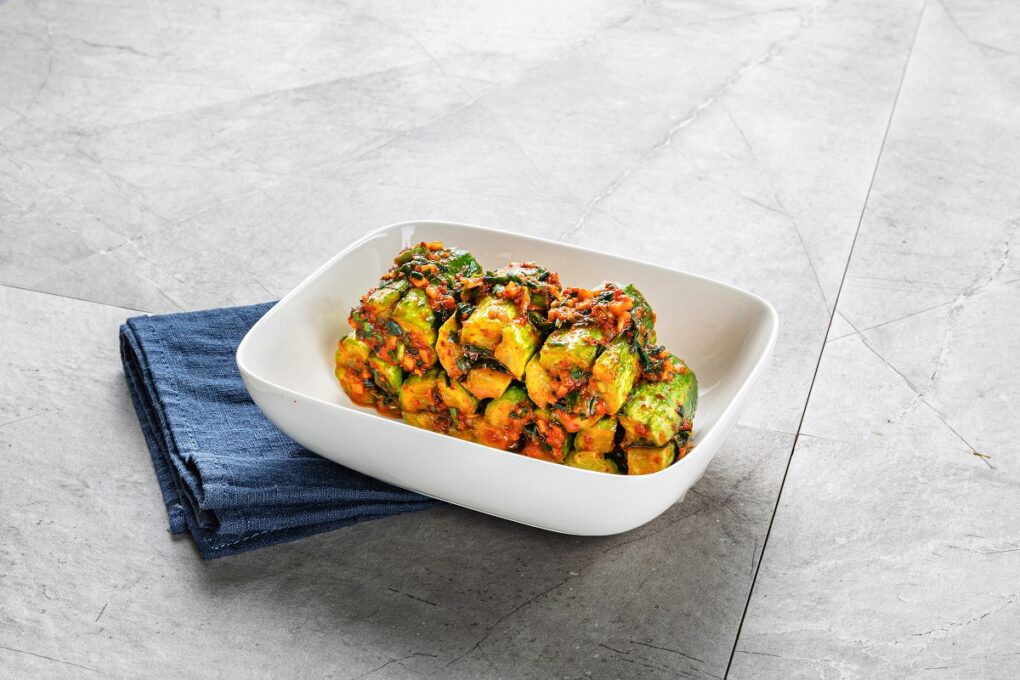
Oi Muchim (오이무침, Spicy Cucumber Salad)
This deceptively simple dish is packed with flavor - bright and tangy, savory, slightly sweet, and spicy. Seasoned cucumber is a succulent and fresh ban chan that is wonderfully crunchy and refreshing. "oi muchim" directly translates to "seasoned cucumber" in English.
Thin slices of cucumber are tossed in hot pepper flakes, toasted sesame seeds, and sesame oil in the popular ban chan. Some recipes include sugar and vinegar.
If you plan to make this side dish, I recommend combining the ingredients just before serving to keep it crisp and fresh and prevent it from becoming watery. It's ideal for grilled meats because it's refreshing and just spicy enough to give you a kick!
Sigeumchi Namul (시금치나물, Sautéed Spinach)
Sigeumchi namul is a simple Korean side dish (banchan) made of gently blanched spinach that has been seasoned with soy sauce, garlic, and sesame oil. It's sometimes served with toasted sesame seeds on top.
Sigeumchi namul is a common ingredient in bibimbap and one of the staple ban chans at Korean restaurants. It's a popular side dish due to its health benefits, which include high nutrition while being low in calories and simple to prepare.
It’s one of our favorite ban chans to make. Follow this recipe to try it for yourself.
Gamja Jorim (감자조림 Korean Braised Potatoes)
Gamja jorim is a simple Korean side dish made from potatoes and a few pantry staples. In this recipe, cooking the potatoes in the garlicky sweet soy sauce allows the flavor to penetrate completely. Reduce it for a longer period of time until it forms a delectable sweet, sticky glaze, then sprinkle with sesame seeds.
It can be served at room temperature or cold at times, but it is best served warm to hot. These braised baby potatoes go well with steamed rice and grilled meats. It helps balance the savory smoked meats as well as the spiciness of the kimchi and sauces in your meats.
Maneul Jangajji (마늘장아찌, Pickled Garlic)
Pickled garlic is another popular side dish at K BBQ joints. Garlic cloves are quick-pickled in a vinegar and soy sauce brine and served cold in maneul jangajji. The garlic has lost much of its pungent bite and has turned slightly sweet and tangy, making it even easier to eat more antimicrobial fresh garlic.
The remaining sweet and sour liquid can be used as a dressing or a quick dipping sauce. It's no secret that Koreans adore garlic, and you'll enjoy it in your own Korean barbecue feast. Make it at home with this easy recipe.
Spicy Radish Salad (mu saengchae)
Mu saengchae is a quick substitute for kimchi. This radish salad pairs well with bibimbap (mixed rice with meat and assorted vegetables), and it adds a slightly sweet and peppery flavor to your meat.
Mostly seen in KBBQ places during fall, this side dish adds a sweet, juicy, and somewhat peppery taste to your meat. In Korea it’s seen as a refreshing treat to reset your palate after eating too much meat.
Stir-Fried Zucchini (hobak bokkeum)
If you feel like having homemade KBBQ in the summer, this is a yummy side dish that tastes sweeter than stir-fried cucumbers. Also, its sweetness is accompanied by a hint of umami with a garlicky aftertaste. It’s hard to explain, so if you see it, try it— you won’t regret putting this in your mouth.
Steamed Eggplants (gaji namul)
Eggplants are a hit or miss, and even if you happen to be one of the people who loathe this vegetable, this recipe might change your mind. This delicious summer side dish requires a slender eggplant with a rich purple color and shiny skin; other varieties won’t do.
A bit challenging to make, the process covers the bland taste eggplants are notorious for, and offers a delightful blend of garlic, soy sauce, sesame oil, and gochugaru.
🥣 Korean BBQ Sauces
Ssamjang (쌈장)
Ssamjang literally means wrap sauce in Korean. It's usually served as a dipping sauce for grilled Korean BBQ meat wrapped in lettuce or perilla leaves. Dip cucumber or carrot sticks in this spicy, sweet, and savory sauce.
Doenjang (Korean soybean paste), gochujang (Korean chili pepper paste), green onions, sugar, minced onion and garlic, sesame oil, and toasted sesame seeds are all used to make ssamjang. As a result, it is both sweet and savory, with a spicy kick.
Sesame Oil, Salt and Pepper Sauce (소금 & 후추 기름장)
This is a simple DIY sauce that can be made on the spot. To make, you'll need a couple teaspoons of really good toasted sesame oil, a pinch of Kosher salt, and ground black pepper.
This produces a nutty and savory sauce that pairs well with non-marinated pork belly or beef, as well as grilled mushrooms. Because it has a milder flavor than ssamjang sauce, it brings out more of the flavor of your grilled ingredients.
I enjoy this combination because it is subtle yet savory, especially when I make a more basic ssam with lettuce and grilled meat that is then dipped in this sauce. It's not oily at all.
Cho Ganjang (Korean Brisket Sauce)
Choganjang is a must-have dipping sauce in Korean cooking. Though typically served with jeon (Korean pancakes), fish cakes, and mandu (Korean dumplings), it can also be paired with non-marinated grilled meats in K-BBQ.
Cho is Korean for "vinegar," and Ganjang is Korean for "soy sauce." So quite literally, this dipping sauce is made with soy sauce, rice vinegar, sugar, and water.
Other ingredients such as garlic, onion, or gochugaru may be added to give it a slightly sweet, tangy, and savory flavor (chili pepper powder). To add a more savory flavor, top it with sliced onions, wasabi, ginger, or other sharp ingredients.
Red Chili Paste (gochujang)
An incredibly sticky paste, gochujang is a strong, savory, and pungent condiment that works well as a base ingredient in meat marinade and in ssam. Combine this with doenjang (fermented soybean paste) and you’ll make everyone’s favorite KBBQ dipping sauce: ssamjang.
🍶 Best Drinks for KBBQ
Alcoholic beverages have been served with grilled dishes since before the Joseon era. Korean drinking culture and etiquette arose from "Sohak," or "Lesser Learning," at the time, according to the National Research Institute of Cultural Heritage.
There's also a proper way to serve and drink it. Here are some of the customs for drinking soju:
- In Korean restaurants, soju is served by the bottle at the table, with a set of shot glasses.
- Much of Korean etiquette, including drinking sessions, revolves around respecting elders. When drinking with elders, make sure their glass is first filled. When pouring for them, keep both hands on the bottle. You can also place your free hand on the pouring arm.
- Unless you're dining alone, never pour your own drink. Koreans typically do not pour their own drinks, someone else does. As for that person pouring drinks, he/she will then pass the bottle to someone else who will refill their glass for them.
- Pour and receive drinks with both hands, or have both hands touching the glass as a sign of respect, especially if the person pouring your drink is an elder.
- There is also proper etiquette for drinking soju. When drinking, turn your head slightly away from the elders, cover your mouth, and never look at them directly when sipping. This is a respectful gesture. This is less significant in business settings or when drinking with friends, and colleagues.
Soju is what makes the Korean dining experience ten times more exciting, especially in larger gatherings. Through soju, people introduce Korean drinking games, which are also a good icebreaker if you run out of things to bring up with coworkers.
The next time you find yourself in a KBBQ place with friends, I suggest the following drinks for Korean BBQ to spice up your night.
- Soju (Korean Liquor)
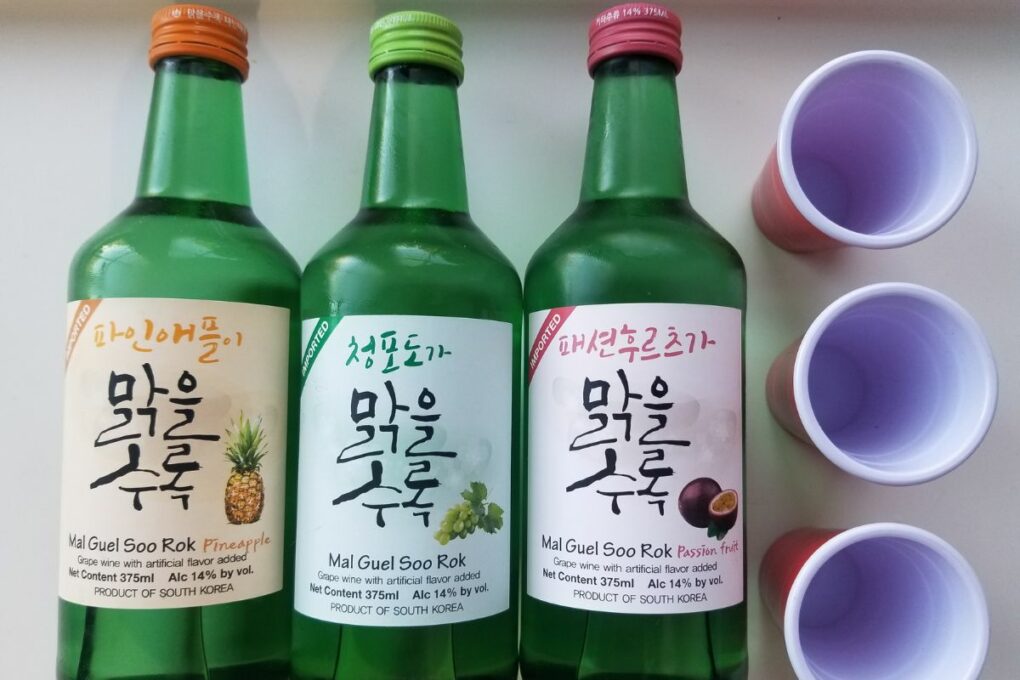
Obviously the most famous drink on this list, soju is a clear liquid usually in a green bottle, made from rice and grains. While most say it has a ‘clean’ taste like vodka, I believe it is a bit sweeter and less powerful than vodka, which makes it a great base for a variety of soju cocktails.
Plus, while most locals say it tastes like juice to convince you to drink, it does not taste like juice at all (not even the grape flavor, though it ain’t bad). Just remember to pace yourself, because this stuff is strong.
- Makgeolli (Rice Wine)
Makgeolli is a sweet, sour, and somewhat bitter carbonated rice wine that leaves a tangy and viscous feeling on your tongue. Better known as the ‘farmer’s wine,’ this Korean liquor is commonly enjoyed after work in Korea, especially by those with physically laborious jobs.
Moreover, makgeolli is often the go-to whenever it rains or when people go on hikes; it's popularly sipped from small copper bowls in more rural parts of the country. Even though this beverage is somewhat less harsh than soju, it takes a while to actually feel the effects, so always remember to drink in moderation.
- Bokbunja (Raspberry Wine)
This is a traditional Korean alcohol made from wild raspberries; it’s sweet and tart – which is why most classify this as a dessert wine. Perfect for KBBQ, this drink is said to help in digesting the heavy portions of Korean food in your belly.
- Maekju (Beer)
In other words, beer. Commonly preferred by the younger generation, maekju is a good choice if you don’t feel like having the type of night that soju brings (read: a hangover). I highly recommend Cass, because it is seriously cheap but also not terrible (about as good as Korean beer gets).
Go for Hite if you want something lighter. Corona is a tasty option, while Kloud has a fruity aftertaste that allegedly improves the taste of grilled meat in your mouth. But I’ll let you be the judge of that.
✔️ Tips for Making Korean BBQ at Home
The pandemic was a bleak and dreary period for all of us, but in Korea locals found a way to recreate their favorite group dinner activity in their very own home.
To recreate the KBBQ experience at home, you must get a grill or a hot plate that can be placed on top of a portable gas stove. Other than these two things, here are three important things to keep in mind before prepping Korean BBQ at home.
- Don’t get just any meat cut.
For beef, opt for the sirloin, short ribs, chuck eye, and finger short ribs. But if you’re gunning for bulgogi, make sure that your home grill is compatible for cooking this delicate slice (like a griddle surface or a grill pan). You'll also need to prepare your marinade ahead of time, to flavor the meat overnight.
As for pork, get sliced pork belly that isn’t cured or smoked; either fresh or frozen will work. In other words, bacon is not samgyupsal, even though it is the exact same cut of the animal. As for chicken, for easier grilling, it is recommended to choose boneless cuts when doing at-home KBBQ.
- Prep beforehand!
Even though the idea of KBBQ at home is quick and easy, you do still have to marinate the meat. You also need to make enough Korean BBQ sauces to give people plenty of flavors to choose from.
The fun thing about KBBQ is that the taste of the marinades is meant to be bold, tangy, sweet, sour – basically, anything but bland. Also make sure that you have enough vegetables for ssam, but if you run out, rice is a fantastic alternative.
- Don’t forget the drinks!
Drinks for Korean BBQ is a no-brainer. All you have to do is visit the nearest H-mart and buy Cass, Terra, or if you want something stronger, try makgeolli and soju. Liquor free options at Korean restaurants are usually just cola and sprite, but you can try Milkis and Chilsung if you spot it in your area.
- Don’t just grill the meat.
Aside from ensuring that there’s oil on the pan (or that it's nonstick), you would typically rub the cut end of an onion over the grill to spread the oil evenly. Once hot, the grill is not just for the meat— you can actually cook some of the ban chan served on your table (especially the kimchis).
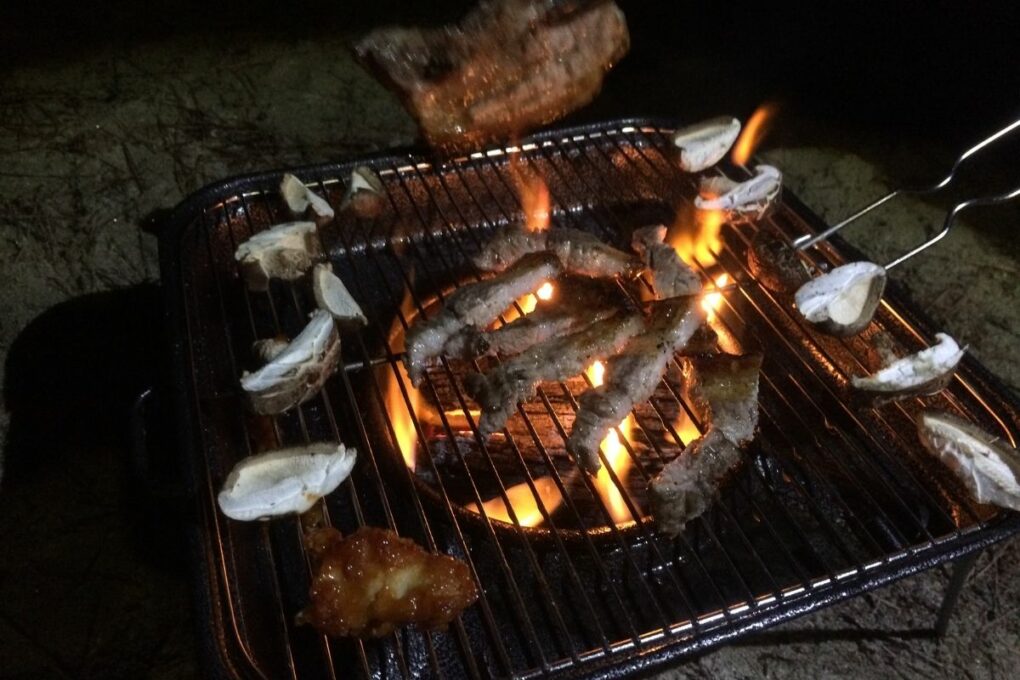
If you like them, various types of mushrooms, garlic slices, thick-cut onion, and whole hot peppers are also typically cooked on the grill.
- Cook from the middle.
The hottest part of your KBBQ grill will be the center, even if using a charcoal grill rather than gas. When making KBBQ at home, you'll want to preheat the grill for a few minutes and then use your tongs to place your first meats in the middle of the grated pan.
As the different-sized meats cook, you can use those same tongs to move the pieces to the outer part of the pan once done, where they'll stay warm but won't keep cooking. The same goes for any vegetables or side dishes that you put on the grill.
🙋🏻♂️ Frequently Asked Questions
For KBBQ at home, you'll need a grill or hot plate and cast iron pan, various cuts of meat (commonly beef, pork, or chicken), a few vegetables for the grill, side dishes (known as banchan), and dipping sauces. Additionally, you'll need utensils such as tongs, chopsticks, and scissors for cutting meat.
To make Korean BBQ at home without a grill, you can use a heavy skillet or a stovetop griddle to cook the meat. Be sure to ensure proper ventilation, as cooking can generate a lot of smoke.
Common cuts of meat for Korean BBQ include thinly sliced ribeye for bulgogi, pork belly for samgyeopsal, and short ribs for galbi. The key is to use well-marbled, tender cuts that can cook quickly on the grill.
Korean BBQ sauce, particularly for bulgogi, is typically made from soy sauce, sugar, sesame oil, garlic, pepper, and sometimes pureed pear or apple for added sweetness and tenderization.

Have you tried this recipe?
If you like the recipe, please leave a 5-star ⭐️⭐️⭐️⭐️⭐️ rating on the recipe card, or even a comment! I love to hear how your recipes turned out, and your feedback can help other readers! Also join us on Facebook & Pinterest.
📖 Recipe
Easy Korean BBQ at Home (KBBQ)
Equipment
- 4-5 serving tongs one for each meat
- 4 platters for the grilled meats
- 1 large bowl for salad greens
- 3 small-medium bowls for banchan
- 8 Chopsticks
- 8 spoons
- 8 chopstick rests optional
- 8 small plates
- 8 sauce dishes
- Portable Stove or Tabletop induction stove
- Cast Iron Grill pan or Griddle plus 1-2 changes of grill pan, depending on how much & what types of meats you'll grill
- 2 Kitchen Shears
- 8 Shot Glasses and/or Cups
Ingredients
- ½ Kg. 16oz. Dak Galbi marinated chicken thighs, boneless is best
- 1 Kg. 16oz. Samgyeopsal non-marinated pork strips or preferred pork cut that hasn’t been marinated
- 1 Kg. 32-34oz. Bulgogi marinated beef strips or preferred beef cut that has been pre-marinated
- ½ Kg. 16oz. Ggot Deungsim non-marinated premium cut of meat for that something extra for the evening
- ½ Kg. 8oz. uncooked rice or 2 pounds cooked rice
- ¼ Kg. 8oz. Spring Onions plus 2 tsps. gochugaru, 1 Tbsp. toasted sesame seeds apart from pantry ingredients vinegar, soy sauce, and sugar
- ¼ kilo Fresh Garlic for the Spring Onion Salad and to grill or eat raw 8 oz by weight
- 1 large bag of Fresh Kimchi
- 1 large tub of Marinated Spinach
- 1 large tub of Soya Bean Sprouts or Stir-fried Fish Cake
- 1 bag of Lettuce or other Greens butter lettuce, iceberg, Romaine, bibb, or perilla leaves
Instructions
The day before:
- Prepare your meats. If anything needs to be marinated, do this a day prior, ideally the evening before. You can make your own marinade or buy any of the available marinades from the Korean grocery store.
- Cook or purchase side dishes ahead of time.
- Place soju and/or beer in the fridge to chill.
Two hours before:
- Prepare the vegetables by washing, rinsing, drying, and cutting them.
- Lay out the ban chan (side dishes) in small serving ware.
- Prepare the sauces. You can serve them in their container or ladle them in cute ceramic bowls for everyone to help themselves, buffet style. Likewise, you may portion them individually and put them in front of each place setting.
- Plate your meats (separately, to prevent cross-contamination). If you’re using bone-in meats, be sure to place ‘bone bowls’ evenly on the table so that everyone has a place to put their spent ends.
- Set the table, stacking small plates, chopsticks and spoons.
- Prepare your grill or hot plate, opening the windows if you’re inside the house, then brush the grill with oil.
- Cook rice and portion it out or put it in a large bowl.
To cook the KBBQ:
- Turn on the grill to medium, then brush the grill with oil if you haven't already. When the grill plate is hot, use a fatty meat part or an onion to spread the oil evenly so that the meat will not stick to the pan.
- Put your vegetables on the grill first because they take the longest to cook. Then add some meat slices. Start with one kind at a time. Cook the non-marinated meats first, and end with the marinated varieties to minimize smoke. Arrange the meat pieces on the grill, making sure they're evenly spaced. You can cut large slabs of meat before or after cooking, depending on how you prefer your meats.
- When cooking thin slices of meat, like bulgogi, leave them alone for a full minute before you start to flip. This allows the juice to lock in the meat; you’re not meant to move them around like when you’re sauteing.
- When you notice the top of your meat is starting to sweat or slightly starts to become charred (only recommended for extremely fatty cuts), you can flip them. Don't be that person at the table who flips their meat more than three times - Koreans firmly believe that grilled meats should be left alone to cook nicely. Otherwise, your juicy cuts of beef, pork, or chicken will become rubbery jerky.
- After another minute, check to see if your meat is cooked through. If you see that it needs more time, flip it again a final time. When cooked, the meat has a nice char and it’s time to take the pieces off the grill.
- Portion the meat into small plates by using kitchen shears to cut them up. You can cut them directly onto a platter or serve onto individual plates. If there are burnt pieces, you can snip them off at this point, too. If you’re using bone-in meats, you can snip these directly into the bone bowls. It’s best to enjoy K-BBQ as soon as they’re cooked so don’t cook a lot at one time. This also keeps the grill pan from emitting too much smoke.
- Continue this process with the rest of the meats; it’s good to have a back up hot or grill plate if it gets too smoky. If you have a large enough grill, you can set aside some meat pieces on the edges to keep warm, and do the same with basically any vegetable.
Notes
- A bottle of good Sesame Oil
- Kosher Salt
- Ground Black Pepper
- Ssamjang
- Gochujang Sauce
- Kyeoja (Sweet Mustard Sauce)
- Sweetened Soy Sauce
Comments
No Comments