
Five tastes generally describe Korean food: sweet, sour, salty, bitter, and spicy. But did you know Koreans have another sense of taste? This intriguing sense is called siwonhan-mat (시원한 맛), which is the refreshing sensation that courses through the nerves of the tongue, stomach, and even the intestines when eating.
In other words, this is the sense of relief and comfort you feel when eating certain foods. The search for this refreshing sensation is evident throughout seasonal Korean cuisine, but it’s not limited to warm-weather foods.
Korean food stands out from the rest because it inherently emphasizes natural and seasonal components such as tofu, beans, garlic, and the infamous kimchi. White rice is also an essential part of every meal– so much so that “밥 먹었어요?” or “have you eaten rice?” is a common greeting, especially from elders.
This unusual greeting goes back at least to the Korean War (called ‘The Great War’ in Korea), when citizens survived post-war by eating street-side meals, which slowly evolved into the specialized restaurant culture Korea still has today.
Street food remains an indelible part of Korean culture, however, with records showing proof of its existence since the Joseon Dynasty. Much like most other food from that time, well-known traditional Korean foods such as kimbap (김밥) and tteokbokki (떡볶이) are largely made from rice, and are cheap & easy to prepare.
While eating these things keeps you full, they’re not exactly good for you, and sometimes the stalls selling them don’t meet local food safety standards. Conversely, restaurants are generally a reliable choice if you want to enjoy true hanjeongsik (한정식), a full-course meal consisting of the finest Korean foods available alongside nearly a dozen small plates.
Typical Korean Food: Breakfast, Lunch, and Dinner?
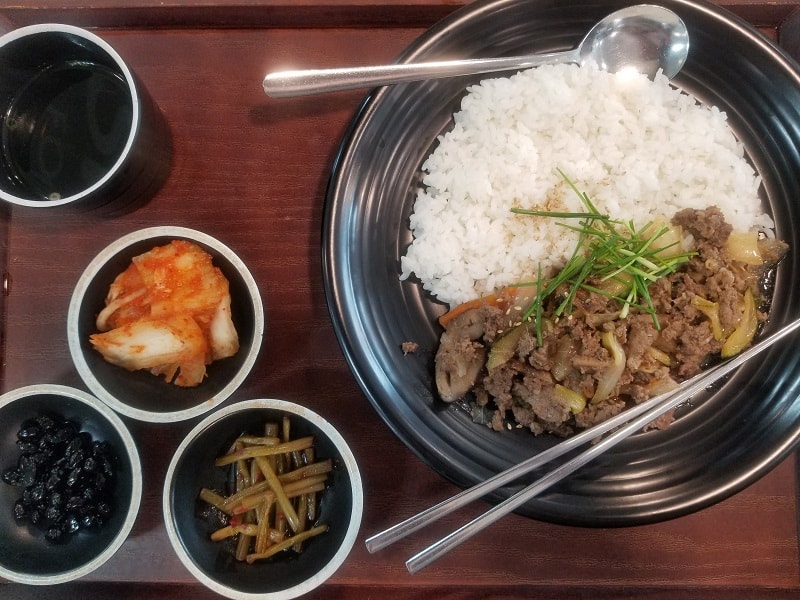
A typical Korean meal is not complete without a bowl of rice, soup or stew, and kimchi (of some kind). But within that basic structure, there is a deliciously wide variation of dishes for every season and palate. The "three meals a day" concept is actually relatively new in Korea, as it’s been common practice to only have two meals a day since the Goryeo dynasty.
After restricting rice consumption to mitigate its supply in the late 1960s, it's rare to see Koreans adhere to the "three-meal" structure unless it's part of their schedule. Students, for example, often have seaweed soup with turnips and fish for breakfast.
Office workers usually skip breakfast to arrive ontime for work, so their spouses often make them dosirak (도시락), the Korean version of a packed lunch. It generally contains the basics: white rice, egg-washed and pan-fried sausages, hard-boiled eggs, and dried seaweed.
Another common variation has sliced gimbap or egg-coated spam instead of the sausage. Dosirak are delicious, very filling, and for many Koreans they bring about that shiwonhan-mat feeling they look for in a meal.
Other options for lunch are usually just anything. Koreans usually come out late (usually past 2 PM), so many restaurants are closed around noon, unless they're in districts popular with foreigners. If you decide to walk around to find a place to eat, you’ll realize that there may be limited options.
These options are usually restaurants that serve the typical ramyeon, bibimbap or kimchi jjigae, and the places that are open will be filled with laborers and blue-collar workers. It's from these sorts of places that you find the origin of mash-ups like Jungkook's bulguri ramen.
Restaurants with machines rather than servers will probably be both the most appealing and the most intimidating to visitors, but they're one of the cheapest options for lunch in Korea.
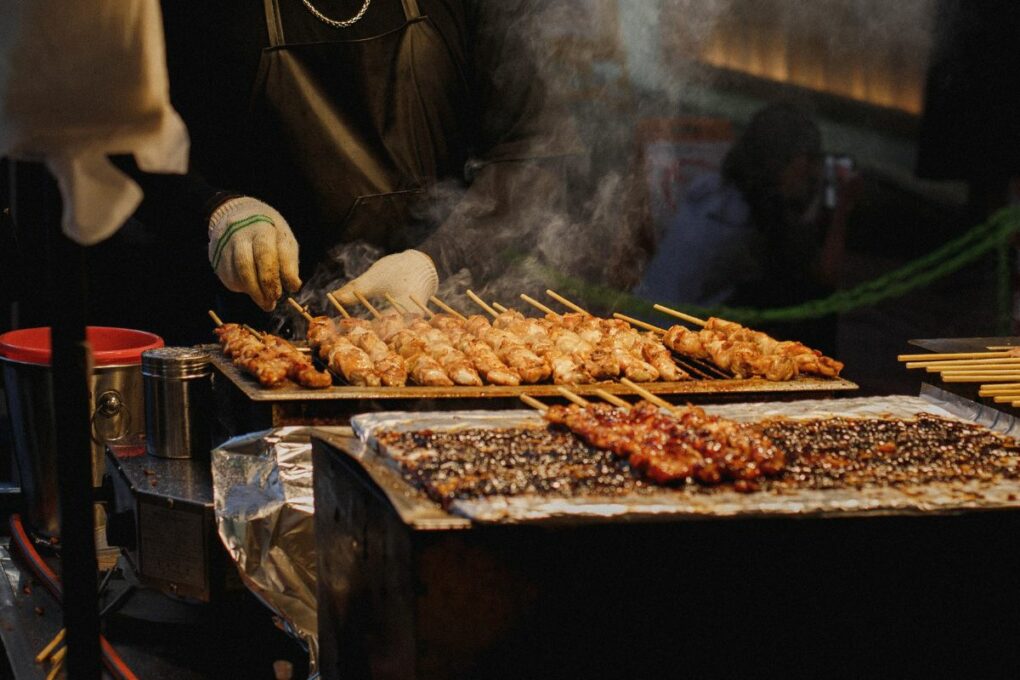
Unfortunately having lunch in these places can make some foreigners feel unsettled because people just come and take stuff from your table without asking for permission first. Sometimes, people just sit next to you and eat. Because of the fast-paced lifestyle, people rarely socialize over lunch and just eat instead.
Socialization with friends is usually reserved for dinner time, as is time to bond with work colleagues. Dinners in Korea tend to have the most variation, as the evening is when Koreans tend to have the most flexibility.
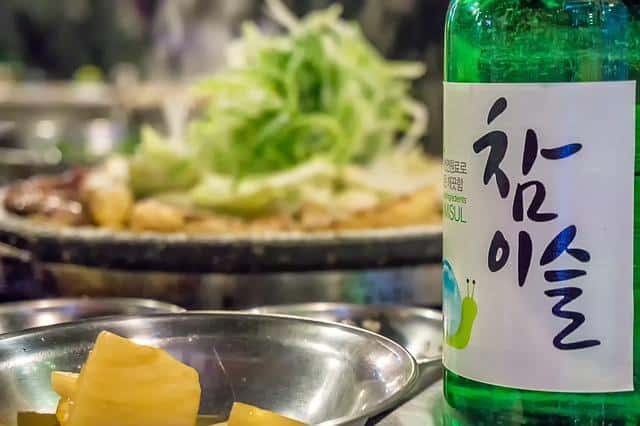
It’s generally seen as the perfect time for a small dinner and then some anju (안주), a Korean term used to refer to foods eaten with alcohol, such as the ever-famous soju. Common pairings with soju are golbaengi muchim, nogari with peanuts, and jokbal; respectively that’s snails with radish kimchi, dried pollack with peanuts, and steamed pig’s feet.
On the other hand, Koreans also have a strong affinity for pork belly and chicken, and these are other common dinners in Korea. What about Korean desserts? Remember that these are not always similar to the Western definition of the word, like cakes and ice cream.
Some Koreans tend to like to sate their sweet tooth after a large meal by consuming sikhye, a traditional beverage made from rice, malt water, and sugar, often flavored with ginger, jujubes, and pine. Furthermore, Koreans also have a type of snowcone that’s super popular in warmer months, called bingsu.
For the uninitiated, bingsu is a creamy, iced dessert with sweet toppings that include chopped fruit, condensed milk, fruit syrup, and red bean paste. Moreover, if you're in Korea, don't stuff yourself silly with snacks from the convenience stores.
Try things like hotteok and susu bukkumi, sold by the street vendors, so that you can have an idea of what Korean students and office workers have as snacks. If you’re living in Korea, there's a cultural practice wherein seonbaes (older people) treat their hoobaes (younger colleagues) to a meal.
If someone older than you decides to pay for your meal, make sure to enthusiastically say: "jal meokkessumnida!" or 'I will eat well' before you begin. Once you're done eating, say "jal meogeosseumnida" to let them know that you have eaten well and are grateful for their generosity.
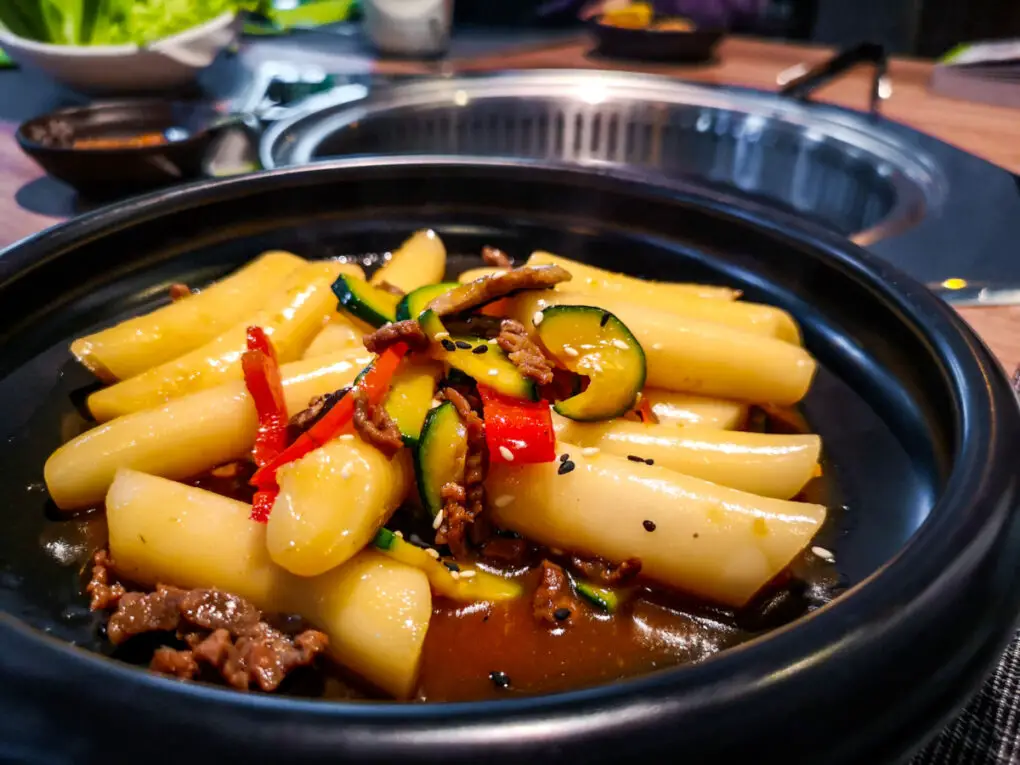
Korean Street Food
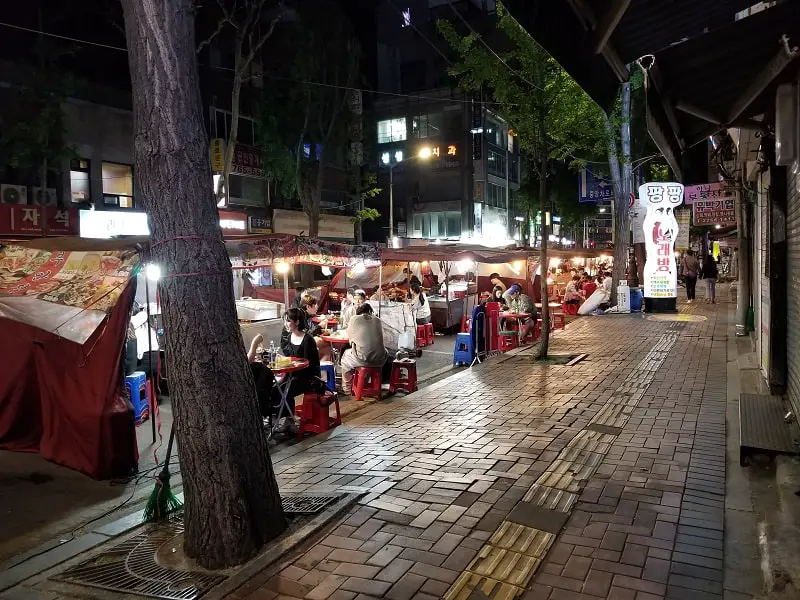
Sijangs (시장), or traditional markets, are notorious for being the main hotspots for Korean street food, but you can also get some from restaurants, cafes, and convenience stores. Part of this resurgence is in reaction to the influx of tourists looking for the ‘authentic Korean food experience.’
Below is a list of five common Korean street food dishes that you should definitely not miss on your visit, especially if you visit an oh-il-shijang (small town 5-day market)! I’ve included an estimated price per item next to the name of each food, to give you an idea of how much to bring to the night market.
Tteokbokki (떡볶이) - ₩1000-₩3000
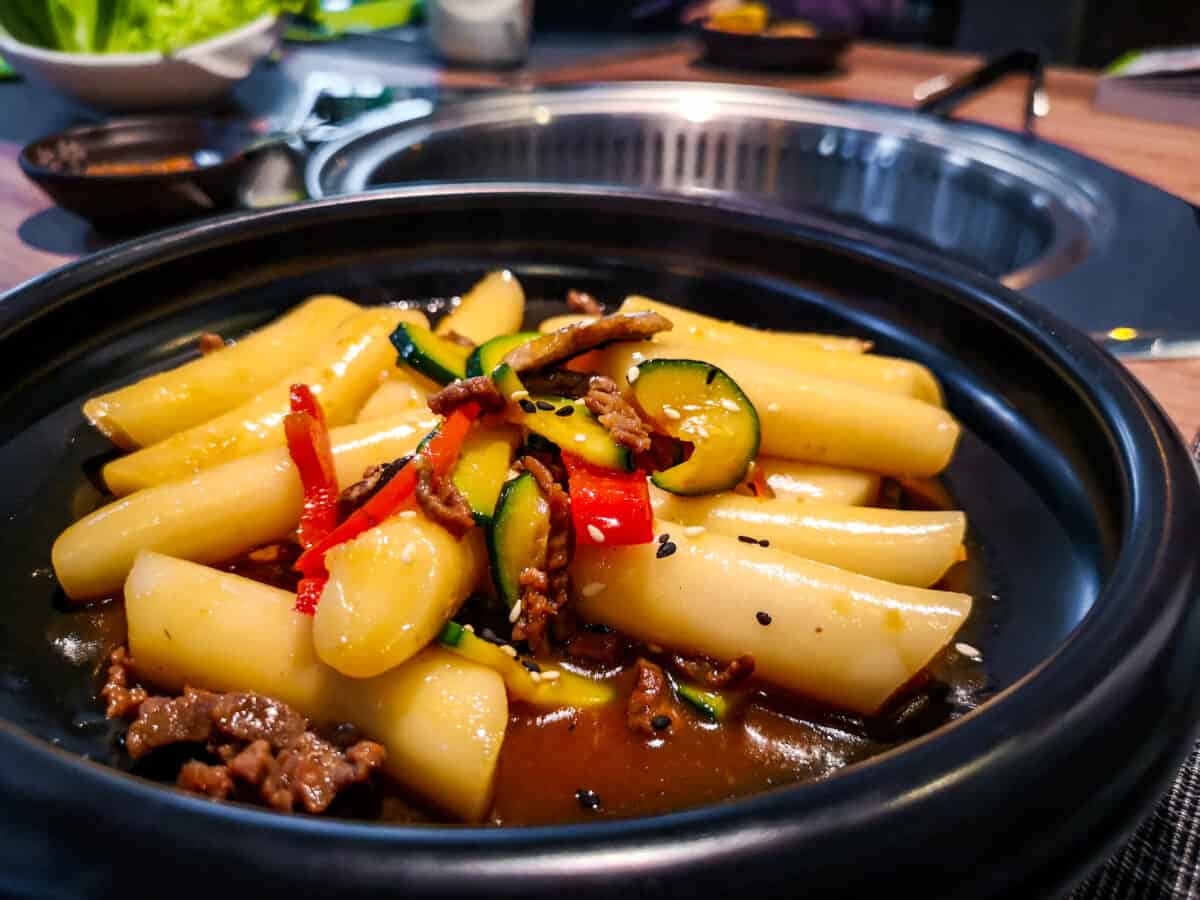
If you’re thinking about Korean food, this is the first dish that usually comes to mind. A top street food item, these iconic red-orange cylinders can be generally found at a pojangmacha. This dish is the perfect snack when craving something sweet and spicy, but not too filling.
It consists of glutinous rice cakes cooked with scallion, soybean paste, fish cakes, and vegetables in a tangy chili sauce, with a sprinkle of sesame seeds and a large dollop of the sauce.
Mandu (만두) - ₩1500-₩3500
The Korean word for dumpling is mandu. These savory dumplings are wrapped in thin sheets of pasta, sometimes even made by hand on-site, but not commonly. Depending on your preference, you can choose any filling you like, steamed, pan-fried, boiled, or even deep-fried.
Mandu is usually served with other dishes, or sold in a set of 6 with a small dipping sauce, with the most common variation being kimchi with pork.
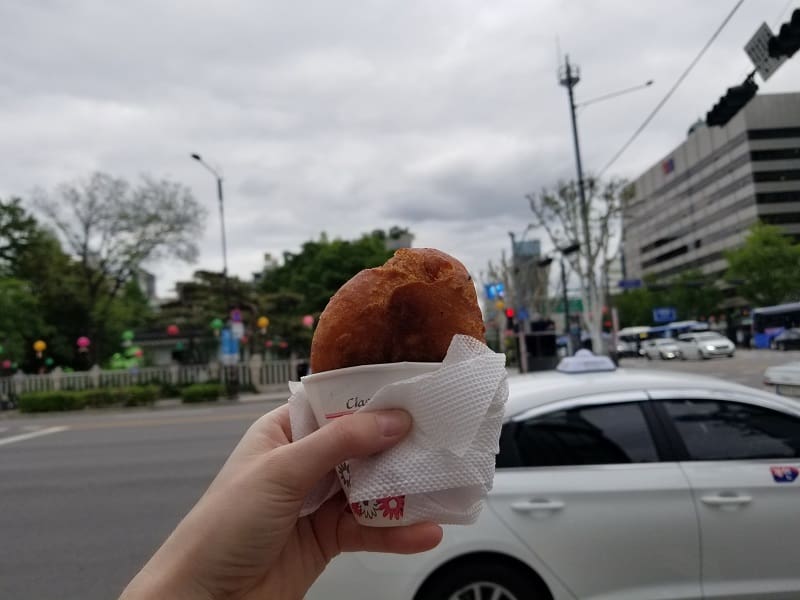
Gimbap (김밥) - ₩1000-₩2500
Koreans have their version of sushi, too, called gimbap. This little seaweed-wrapped rice roll comes with various fillings (usually the leftovers from last night, if they’re homemade), but most commonly it’s spam, eggs, carrots, and cucumber.
It is a popular snack that people enjoy whenever they’re doing outdoorsy kinds of things or need a quick meal. It is a staple in picnics and on hiking trips, and can sometimes be served as an appetizer in restaurants.
Hotteok (호떡) - ₩1000-₩3500
Crunchy-yet-brittle, this hot, syrupy pancake is a hit with those craving something sugary and sweet. The syrup inside is my favorite part of hotteok, since it is a mix of brown sugar, honey, crushed peanuts, and cinnamon. This snack never fails to provide the shiwonhan-mat you look for during cold, breezy nights.
Gyeran-ppang (계란빵) - ₩1000-₩2500
Gyeran-ppang is a strange but very common street food in Korea; it tastes like a sweetened egg sandwich. This inexpensive snack wraps sweet and fluffy pancake dough around a whole quail egg. The salty and sweet flavors mix pleasantly in your mouth, and it’s always prepared quickly, so I love eating this when I’ve had too small of a dinner.
Korean Barbeque (KBBQ)
In restaurants, Korean beef is prepared in many different ways: boiled, braised, grilled, pan-fried, or simply sliced and diced – depending on what you want. Pork is treated the same way, and together pork and beef dominate Korean barbeque restaurants in Korea.
The most famous meat for KBBQ is the pork belly or samgyeopsal, which true to its reputation in Korea is a fatty and flavorful cut. Barbecued beef short rib, or galbi, is another staple at every Korean barbecue restaurant, though you’ll notice that some places still specialize in only one type of meat or even one cut.
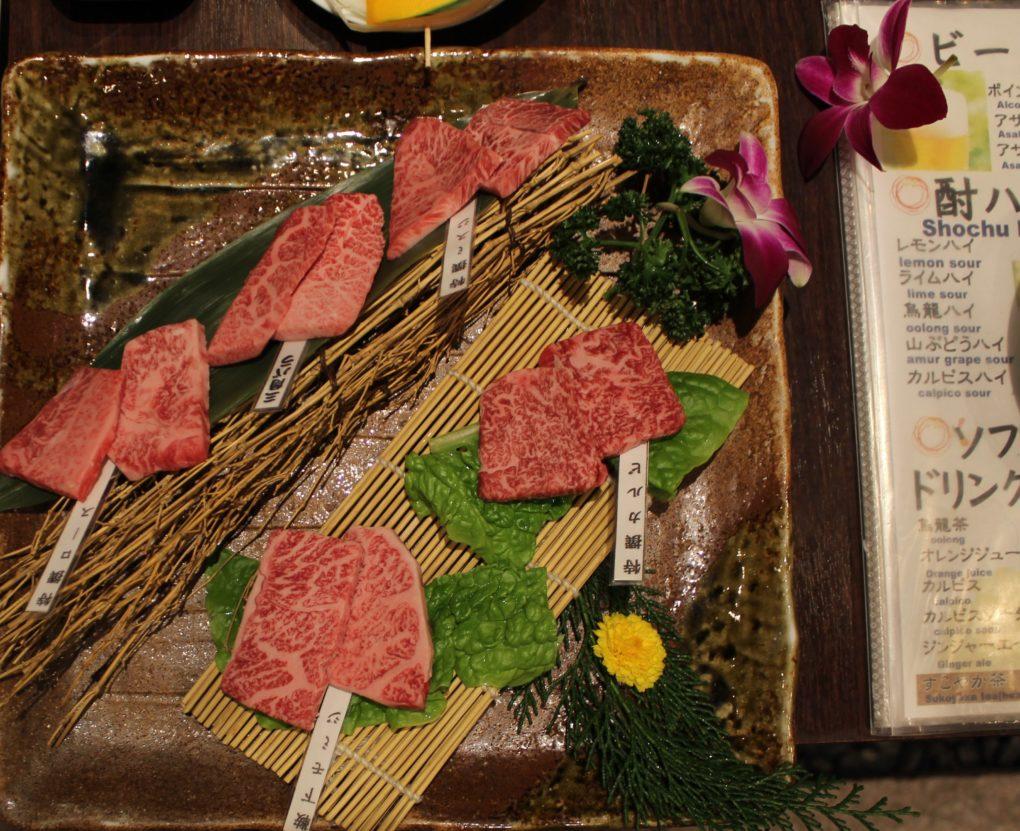
If Japanese have wagyu, Koreans have hanu; according to locals, the demand for this prized beef is high, but the supply is low because there are not a lot of farms that can support cattle here in Korea. I’ve had both hanu and kobe beef (in Kobe), and I can attest that hanu and kobe beef are equally good, characterized by a beautiful marble and that fatty wagyu taste.
It’s flavorful in a sweet way (similar to Angus beef), and each bite feels more tender than the last. Still, if you’re craving beef but you don’t want to spend too much for it, the ones served in any sikdang will be of similarly high caliber because Koreans have a special way of marinating their beef.
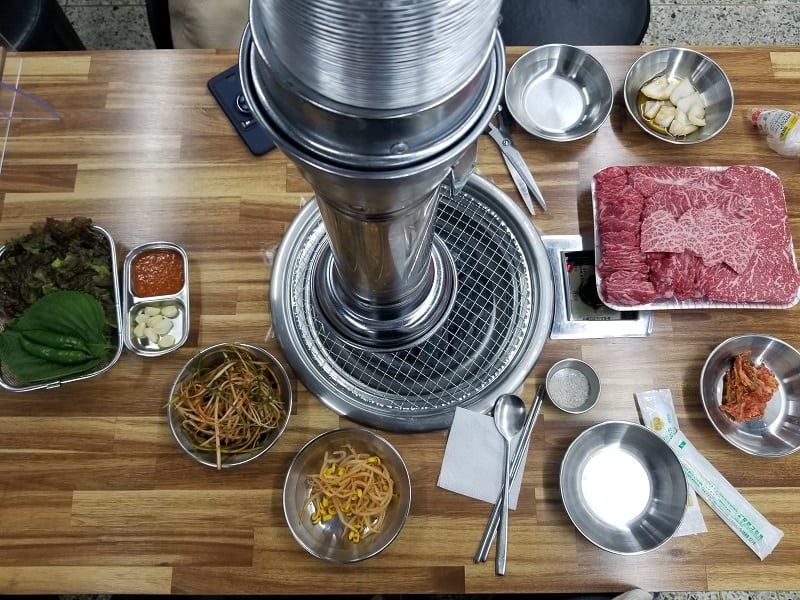
The classic galbi marinade emphasizes the flavor and the tenderness of any meat, beef, pork, or chicken. If you want sirloin beef strips like you find at your local Korean spot, you’ll want to look for bulgogi on the menu.
The secret to its fantastic flavor lies in its marinade, too; like galbi it has soy sauce and garlic but is reinforced with onion, ginger, and sugar. Beyond the meats, what makes KBBQ unique is that they have tables with grills built right in.
The loud sizzle of the meat being cooked on a charcoal or pan grill will tend to make you extremely hungry. To make the wait tolerable, restaurants first serve all customers banchan (free side dishes) like kimchi, kongnamul munchim, and algamja-jorim.
While charcoal-grilled meat is most popular thanks to its unique, smoky flavor, this method can be a bit of a nuisance for people who tend to lose themselves in conversation. Grill pans, on the other hand, have sections that allow multiple products to be cooked simultaneously, such as the meat, omelet and cheese.
Its sectioned design makes it enjoyable for everyone to use, and a fun dining activity to do with friends. If you feel like having KBBQ alone in Korea you can, but it might pose a problem if you’re not that hungry because KBBQ is generally sold in large portions.
Some restaurants also don’t want to serve individuals because they take up a whole table and are still served the same amount of banchan as a show of respect. Additionally, the Korean dining experience primarily focuses on being with friends and family, so it’s seen as a bit strange to get barbecue alone.
Korean Chinese Food
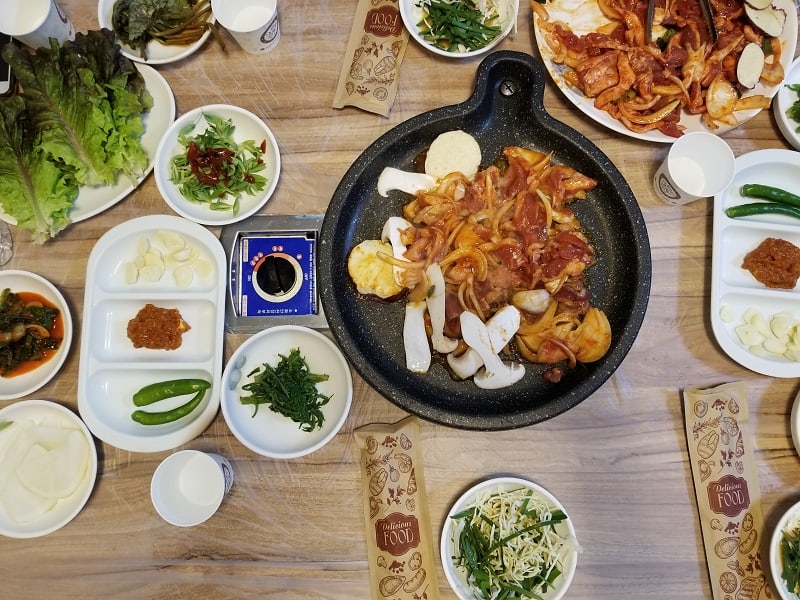
Junghwa yori, also known as Sino-Korean food, is a fusion cuisine created by the ethnic Chinese who came to the port city of Incheon during the 19th century. The following are famous dishes you have probably seen in Korean menus without realizing they came from Chinese influence.
Jjajangmyeon (짜장면) - ₩4000-₩1000
Jjajangmyeon is a noodle dish in black bean sauce (chunjang) topped with diced pork, seafood, and vegetables. This dish is often eaten on special occasions, and people love how filling it is after a long, tiring day— which explains why it was always popular with my students when served in the school cafeteria!
Jjambbong (짬뽕) - ₩8000-₩22000
Jjambbong (짬뽕) is a Korean spicy noodle soup flavored with vegetables, meat, and seafood. This fiery-looking soup can be overly-spicy for some people, but it leaves a satisfying taste in your mouth, if you can handle it.
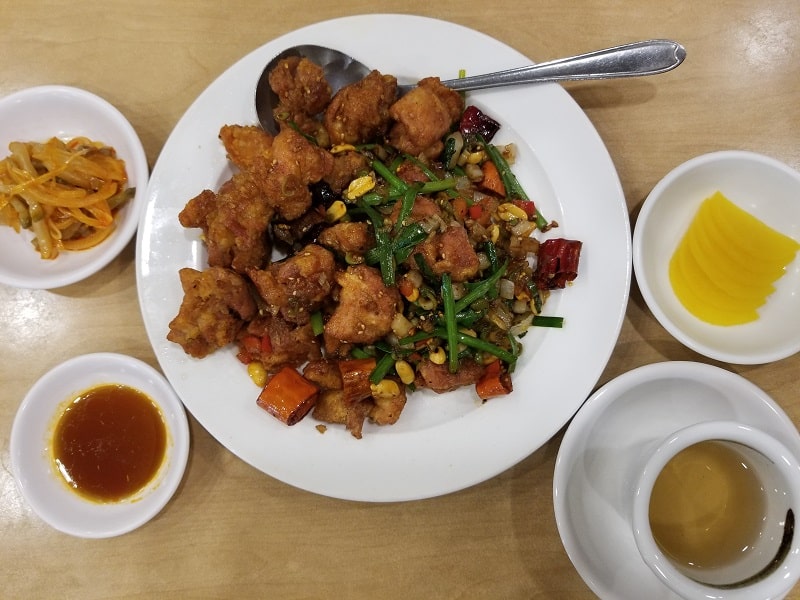
Kkanpunggi (깐풍기) - ₩16000-₩22000
This sweet & spicy fried pork dish is my all-time favorite. I never thought it was a Chinese dish, because the sauce has that spicy Korean kick and it’s always served with preserved radish.
Though it’s usually made with pork, I’d say this is most comparable to the westernized General Tso’s chicken, but the Korean-Chinese version. A similar dish is the sweet & sour tangsuyuk described below, which also pairs well with white rice, and is just as crunchy and flavorful.
Tangsuyuk (탕수육) - ₩7000-₩15000
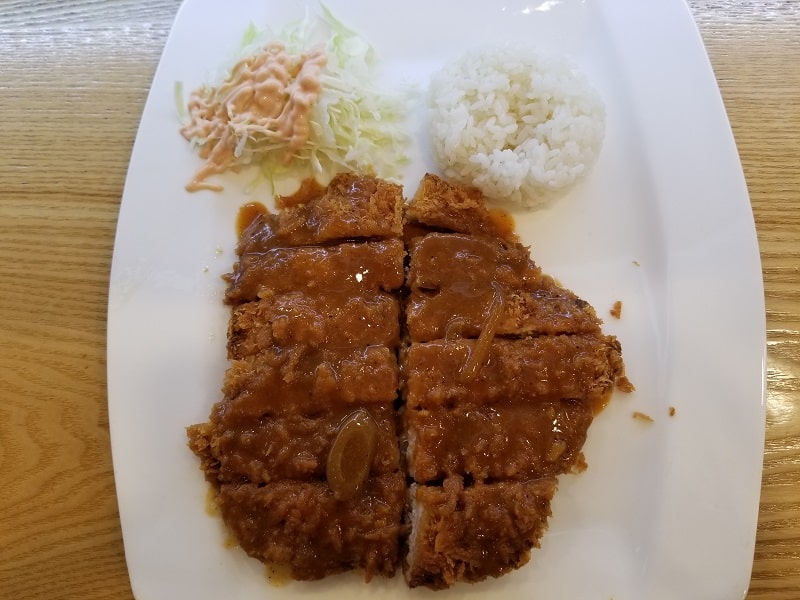
This beloved Korean-Chinese food can easily be poorly-executed, but it’s considered a hit if it meets the following criteria: first, the taste has to have a balanced mix of sweet and sour. Secondly, the pork must be really crispy and should, thirdly, complement the vegetables selected by the restaurant.
This dish really goes well with white rice, and is a go-to food when I eat at a new Chinese restaurant in Korea.
Drinking Culture in Korea
Drinking is a huge component of sociability in Korean culture, and it’s a common thing to see in gatherings. People young & old alike drink the night away and get wasted to the point that they are dragged home by their friends and colleagues during the wee hours of the morning.
Sometimes you can even see these people knocked out cold inside subway cars, only waking up to realize they missed their stop. The very high expectations in school and work are undoubtedly one of the reasons why Koreans consume alcohol regularly.
Korean students study even after school ends, then graduate from college only to enter a workforce built on the same philosophy. In Korea, it is an expectation to drink with your buddies straight after work. This is called hweshik (회식) in Korean, and its goal is to strengthen company team spirit.
Whenever hwesik happens, people eat and drink a lot. Bonding is reinforced by eating shared Korean foods like samgyeopsal, kkanpunggi, and gopchang. This definitely breaks the ice if you are new and you want to get to know your co-workers better.
Most of the time, the night does not end there. Your sunbaenims might want to go to a pocha or noraebang and drink even more, which is more the norm than the exception. Even though there are plenty of horror stories about hwesik, times are changing.
Koreans are becoming even more understanding of foreigners who do not wish to drink too much. Traditional pressure is slowly dissipating, and older people are open to trying new things. Fellow English teachers I know also shared that they rarely came to experience hwesik, and company dinners are usually just all-you-can-eat KBBQ parties.
While attendance at hweshik is not required, it is strongly recommended, and I always went to our monthly staff dinner (hweshik). Refusing an offer for a free meal and drinks can be interpreted to mean you don’t want to involve yourself in their community, and they take this personally.
So if you’re not much of a drinker, make that clear to your boss, but consider going anyway to show your face and mingle with coworkers.
7 More Unique Korean Foods to Try
By now, you should be aware that Korean food encompasses a long list of dishes & delicacies that you can enjoy at any time of the day. This list highlights my top 7 picks for Korean foods you should know.
Bibimbap (비빔밥) - ₩5000-₩9000I know this is common to see in restaurants that serve Korean food worldwide, but nothing beats the bibimbap made by Koreans. This large, hearty rice bowl consists of beef and a seasoned fried egg that comes with any mix of vegetables and dried seaweed, usually cucumber, carrot, and bean sprouts.
Gopchang (곱창) - ₩10000-₩12000
Gopchang is what Koreans call the small intestines of cattle or pig, though it can also be used to refer to a specific dish wherein the grilled small intestines of a cow are chopped into round pieces and grilled to a crisp golden-brown with chewy insides.
Gopchang is typically served with a garlic-infused soy sauce, and customarily paired with a glass of chilled soju. It is a divine combination that shouldn’t be missed, if you can get past the ‘intestines’ part!
Mulnaengmyeon (물냉면) - ₩7000-₩13000
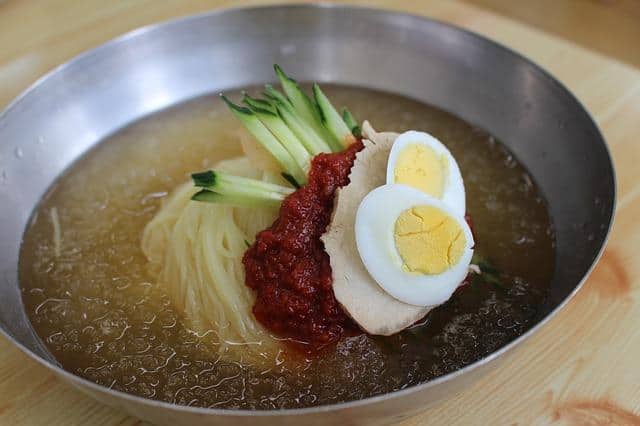
Whenever summertime rolls in, Korean restaurants start to put up signs that they are serving mulnaengmyeon. This dish consists of buckwheat noodles served in a bowl full of ice-cold bone broth, julienned radish, cucumbers, and carrots, and then topped with half a boiled egg, vinegar, and Korean mustard.
It might sound kind of unusual, but this is one of my favorite Korean dishes; the slight tang plus the sweet cold noodles are the perfect accompaniment to hot pieces of barbeque. This dish packs a powerful punch of complicated flavors, but there’s a reason it’s one of the two dishes Koreans often have after eating KBBQ (the other being a hot stew of some kind, depending on the restaurant).
Sundubu-jjigae (순두부찌개) - ₩8000-₩20000
This traditional Korean stew is full of silky hot tofu with fresh vegetables cooked in a spicy broth with gochujang. Afterwards, they crack a fresh egg on top. There are so many variations of this dish because people can request what kinds of meat they want in it, making this the perfect hot meal for the whole family to enjoy.
Haemul Pajeon (해물파전) - ₩6000-₩8000
People who love crispy seafood would definitely enjoy haemul pajeon. These green onion pancakes are made with a batter of rice and wheat flour along with egg, seafood, and vinegar with soy sauce. On rainy days, this crispy delicacy is usually paired with a glass of cold makgeolli.
Japchae (잡채) - ₩4000-₩8000
This chewy sweet potato noodle dish is known for its delicate flavor, and some barbeque restaurants even use this as a banchan (side dish) to complement the taste of the meat.
The addition of the starchy noodles was an innovation from the Chinese in the 20th century, tying the dish to Korea’s aforementioned Sino-Korean cuisine. You can usually order it in bigger portions, too, as it’s best to share it with others.
Bossam (보쌈) - ₩20000-₩38000
Bossam are thinly-sliced cuts of boiled steamed pork in a crisp wrap of pickled cabbage and lettuce. Even though this dish may sound simple, the taste itself is what makes it a worthwhile dish. The pork used in this dish is typically marinated in a flavorful brine mix of garlic, ginger, and herbs before cooking.
Like ssamgyeopsal, bossam is served with kimchi & ssamjang. Koreans love their food, and so should you. Each meal presented in this article was carefully curated to give you an idea of Korean food beyond its spicy reputation.
Food in Korea carries a culture of love and sharing, with many dishes meant to be enjoyed together. The more the merrier, and we would love to share one of these typical Korean meals with you next time.

Comments
No Comments