
When we think of palaces in the west, we tend to think of the royal palaces of England and Spain, but for many people, Asian countries like South Korea spring to mind. That’s because much like their Chinese, Japanese, Thai, and Malay neighbors, Koreans took the initiative to care for the magnificent palaces of Seoul.
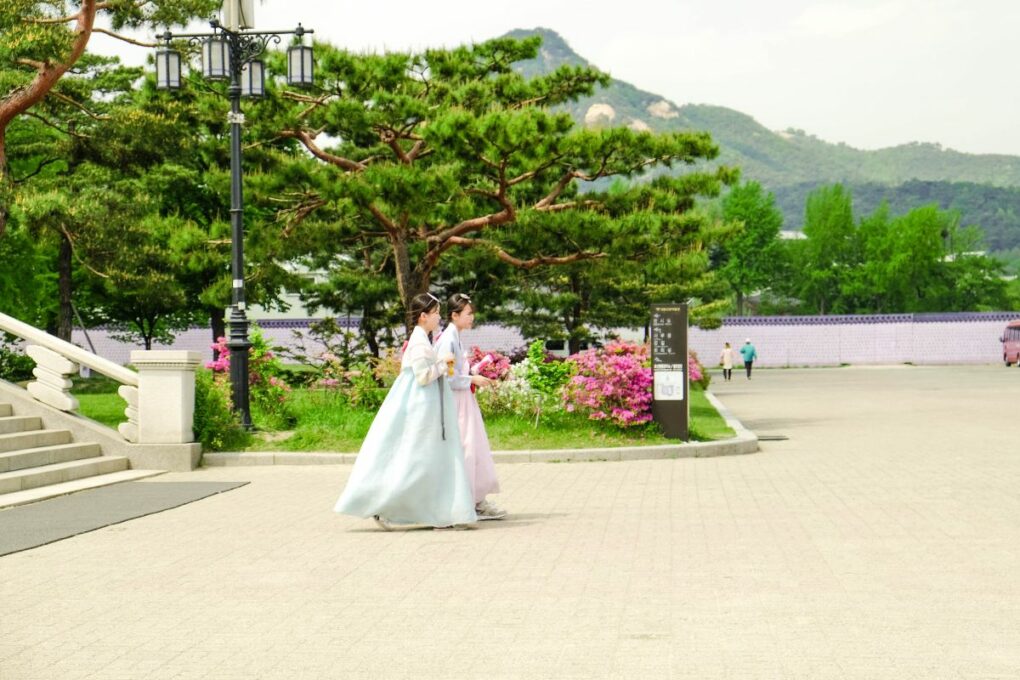
There are five Seoul palaces open to the public:
- Gyeongbokgung
- Changdeokgung
- Changgyeonggung
- Deoksugung
- Gyeonghuigung
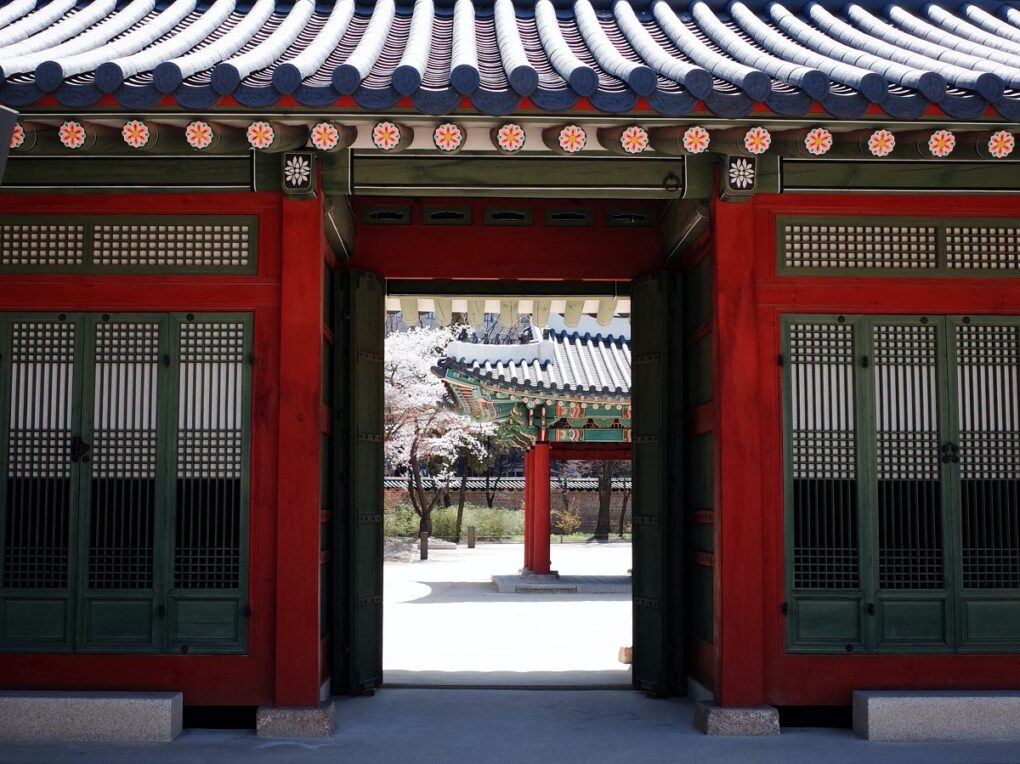
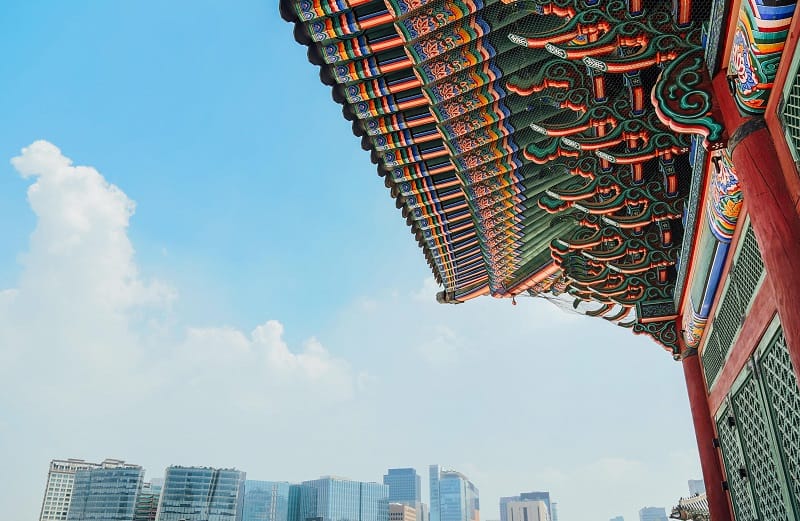
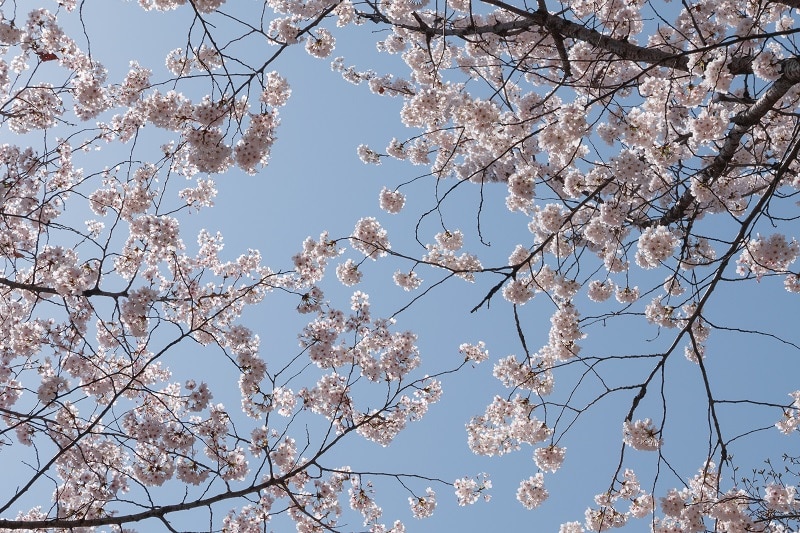
All five Seoul palaces are best seen during spring, when the surrounding flora reinforces the palaces’ dancheong designs, or the color schemes used on wooden buildings and artifacts in pre-modern Korean architecture. Dancheong can either come in red, blue, yellow, black, and white, and these aren’t just random patterns.
There’s a reason they seem to be everywhere when you visit historical sites in Korea. These spots have stories, and as a traveler, it’s fascinating to unravel the meanings of each colorful piece.
The largest palace in Seoul, Gyeongbokgung, actually just reopened the majority of their grounds in spring 2022, after more than half a decade of renovation. So for whenever you set foot into any of the royal palaces in Seoul, here is our guide to taking a respectful trip back into the past.
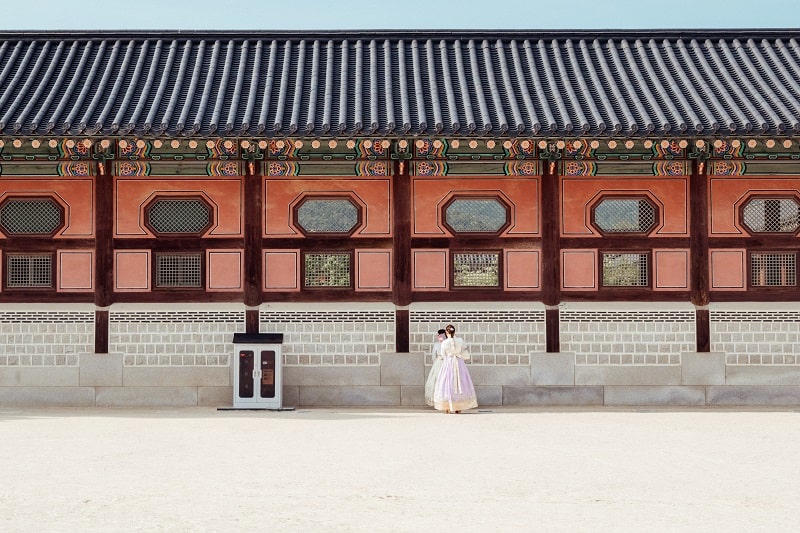
9 Tips for Visiting Palaces in Seoul
Coming to any of the royal palaces in Seoul may seem to require a lot of preparation. The areas around the grounds can get hot & humid (most especially during the Summer), and walking from one site to another may take a while.
A couple of the 5 Seoul palaces are much like a maze, and others are easy to navigate. Overall, it’s most important to dress for comfort (keeping the weather in mind), and don shoes that are perfect for walking.
- Wear a Hanbok to Get in for Free
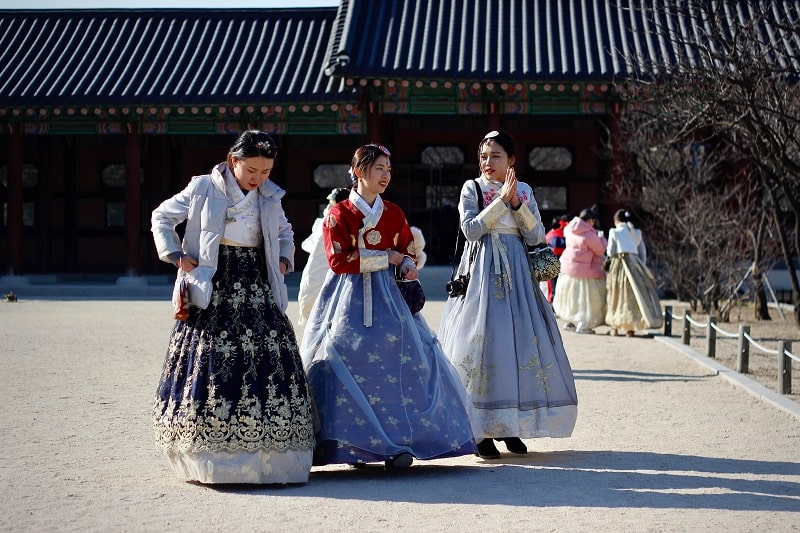
If you don’t know what a hanbok is, it’s a Korean traditional outfit often worn during holidays or special occasions – but you don’t have to have a special reason to wear them. There are plenty of hanbok rental shops outside every Seoul palace, and you can rent these for an affordable price (₩13,000 to ₩15,000 for the afternoon).
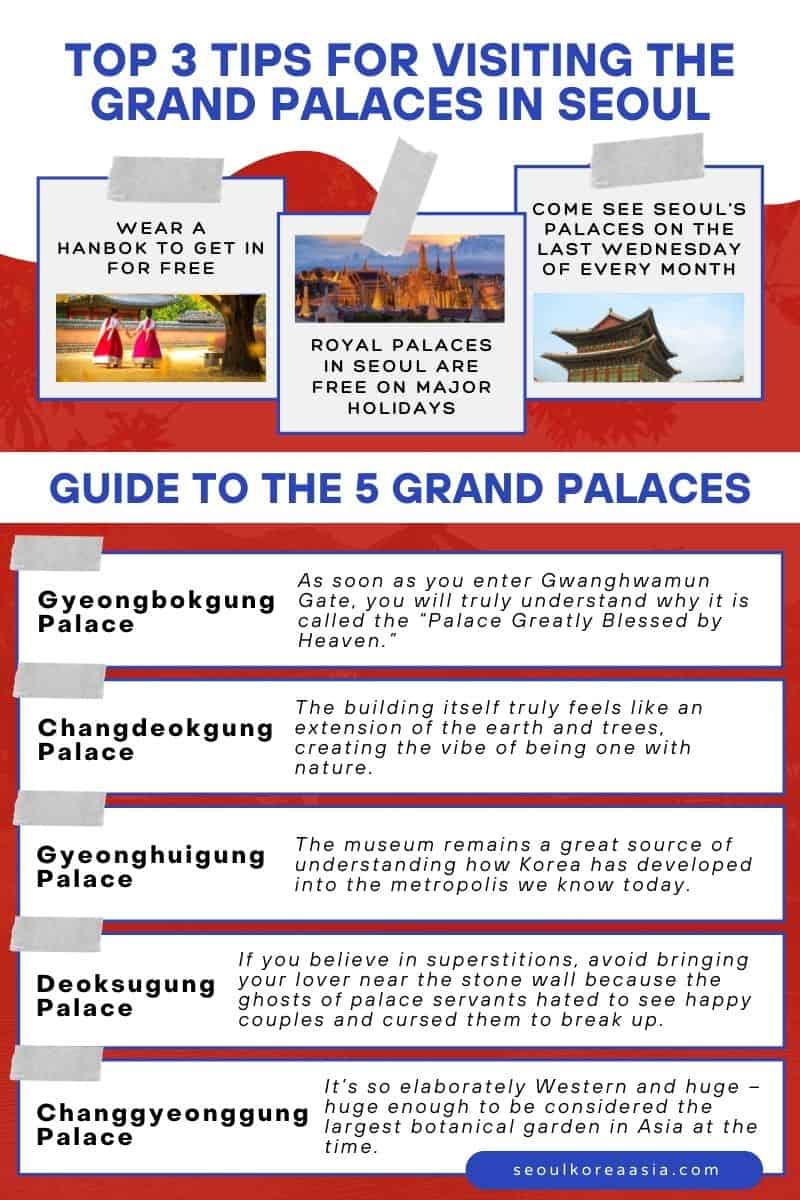
If you want to skip the lines, there’s an option online that lets you borrow hanboks for a whole day. Since 2013 you've even been able to come in for free, because the Cultural Heritage Administration has waived admission fees to anybody properly wearing a hanbok to any palace in Seoul.
By properly, they mean that tourists are expected to follow the requirements on how to respectfully don this traditional garment. Unfortunately, this means that women should strictly wear the skirt (chima) above their waists, despite how uncomfortable and inconvenient it can get in the summer.
The chima can get really billowy and heavy, so people have actually been trying to contest this rule since 2017, but until then, you can save bucks by just wearing the hanbok properly.
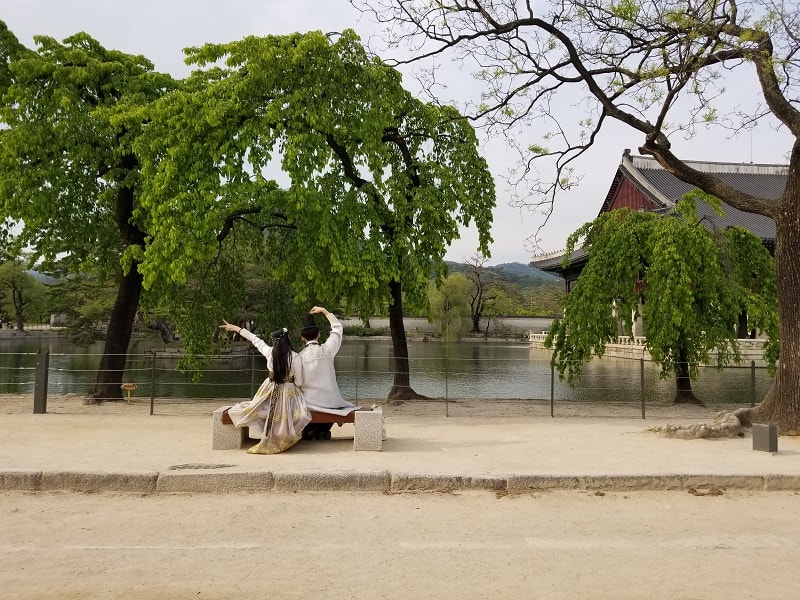
- Royal Palaces in Seoul are Free on Major Holidays
If you’re not keen on wearing the hanbok, there’s another way to get in for free, and that is to time your visits during major holidays like Chuseok (week-long fall harvest festival) or Seollal (Korean Lunar New Year).
Cultural events are plentiful in any of the Seoul Palaces during these holidays, and sightseers will be treated to performances like the pansori (musical storytelling), ganggangsullae (traditional circle dance) and samulnori (percussion dance).
- Come See Seoul’s Palaces on the Last Wednesday of Every Month
Here’s another cool tip: the fee to the royal palaces in Seoul is waived during “Culture Day,” also known as the last Wednesday of each month. This event is created to boost the approachability and accessibility of Korean culture to the public.
On this day, cultural sites other than the Seoul palaces also offer free or heavily discounted admission to locals and tourists. Their goal is to help bridge the cultural gap with opportunities that teach visitors about this wonderful country, so expect to meet lots of locals.
- Don’t Come on Mondays (or Tuesdays for Gyeongbokgung)
The downside of the Seoul Palaces are that they’re not open every day. What if you decide to wear a hanbok to get in for free only to realize that these places are closed? Save yourself from the trouble by researching when the palace closes beforehand, and planning to do other activities that day.
Note that all palaces are closed on Mondays, except Gyeongbokgung (which is closed Tuesdays).
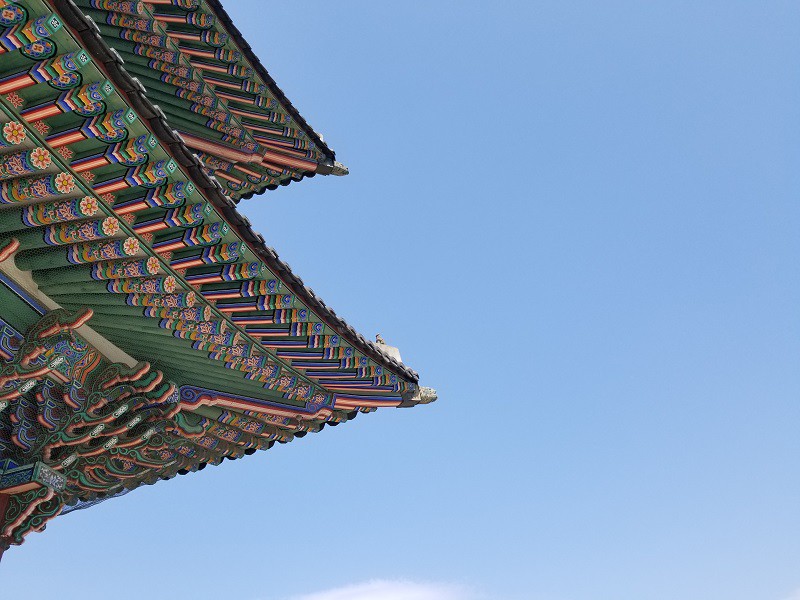
- Join a Seoul Palace Tour
What may aid in your discovery is to sign up for a tour to understand the royal palaces of Seoul even better. These guided tours not only will provide you with a lot of information, but they’ll also show you the optimal walkways to cover all the main parts of the grounds, which is especially important at Gyeongbokgung.
Whether paid or unpaid, these tour opportunities can thoroughly educate those who are genuinely interested in Korean history. Unfortunately, the official tours are only offered once a day in English, which is why many opt to join a paid tour.
Luckily, many of these tours also come with fun activities, like a stop in at a traditional tea tasting within the palace grounds, or photoshoots in special areas that normally require additional charges to get in.
Speaking of tours, Gyeongbokgung Palace offers a free guided tour in English at 2PM every day, and you can register yourself on their website or inquire about it onsite.
- There are Night Tours Too!
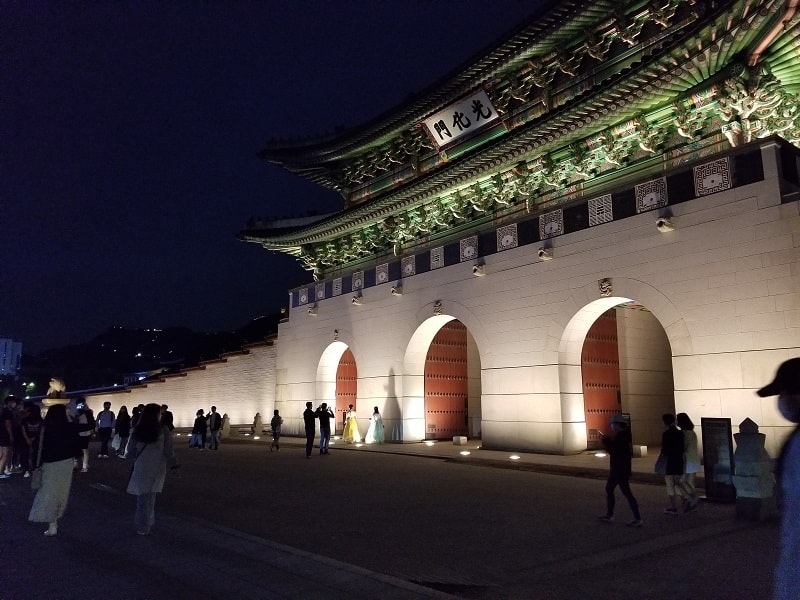
Many tourists are surprised to know that the palaces are even more breathtaking at night, and there are actually tours that let you enjoy a romantic walk around the palace gardens at night.
Evening photoshoots in a hanbok is a popular couples’ activity in Korea, and you can often hire photographers nearby in the most popular spots to take romantic pictures of you and your loved ones.
- Get an “Integrated Ticket of Palaces”
Jumping from one Seoul palace to another may be cheap (because cultural sites don’t really charge much), but it can be even more affordable if you acquire this special pass that lasts for a month. That gives you enough time to carefully plan your trip to the five palaces in Seoul without rush from one to another.
Simply visit any one of the five royal palaces in Seoul and ask for the Integrated Ticket of Palaces.
- Wear Comfortable Shoes
If you’re going to walk around the palaces, it wouldn’t make any sense to wear heels or boots. Keep in mind that you’ll be walking for hours on soft, uneven ground, and even though there are plenty of places to rest, most of the areas are already crowded with people.
If you must bring a bag, pack light, because you'll be walking quite a bit.
- Follow The Dress Code
While we are on the topic of what to wear, there is no formal dress code for any of the Seoul palaces. But it is an unwritten rule that you should show respect by wearing something that covers your shoulders, as this is a cultural site. You don’t want to get scolded by a random older Korean while you’re enjoying your visit.
Fun Fact: 'gung' is Korean for palace, which is why all the palaces' names end in -gung.
The 5 Remarkable Royal Palaces of Seoul
Gyeongbokgung Palace
Hours: closed on Tuesdays; 9AM to 6PM
Season: best in spring
Entrance Fee: Adults: ₩3,000; Children: ₩1,500
How to Get There: Gyeongbokgung Station (Line 3, Exit 5)
My advice is, before you visit other royal palaces in Korea, come see Gyeongbokgung first. This is because before you get to the palace grounds, you can visit a free museum full of well-preserved archaeological digs that date all the way back to the Joseon Dynasty, making it the perfect place to feed your inner history buff.
You’ll also get a good foundation of knowledge before wandering the large grounds; bring a water bottle if the weather is warm. Afterwards you can head over to the actual palace, just a quick walk outside and around, to truly explore the large swath of land that it occupies.
As soon as you enter Gwanghwamun Gate, you will truly understand why it is called the “Palace Greatly Blessed by Heaven.” The immense Geunjeongjeon Hall – also known as the largest wooden structure in Korea – used to be where grand coronation ceremonies were held.
You can join the long queue to peer inside and admire the detailed ceiling dancheong, with stories representing the regal authority of the King.
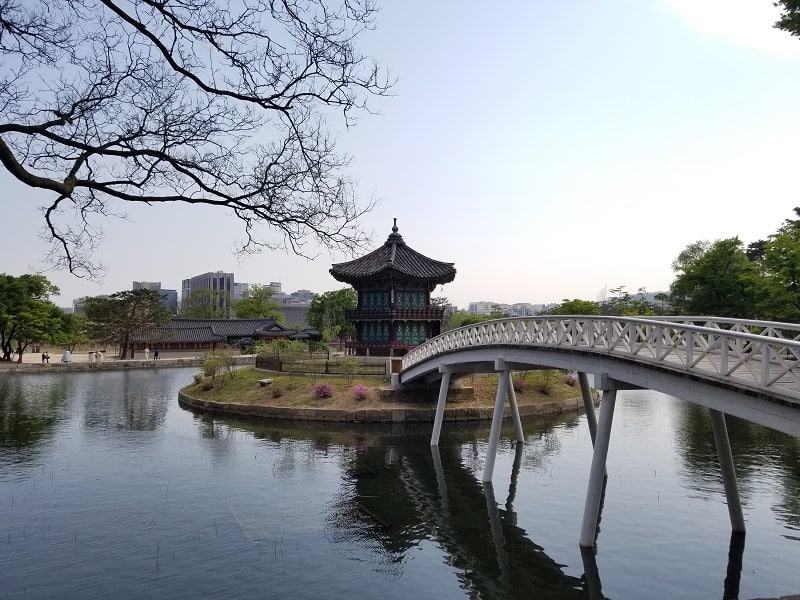
While the entrance is already serving you much of the good stuff, behind this large wooden palace is a walkway to the building floating on a man-made pond. This small structure is called the Gyeonghoeru Pavilion, and it’s a site created to hold lavish banquets to impress foreign delegates whom the King wishes to do business with.
You do have to pay extra to get in, but the panoramic views of the Seoul cityscape will quickly convince you that this is worth it. While in the middle of your visit, you might stumble upon tea ceremonies, reenactments, and traditional instrument performances.
But the most consistent show you’ll ever get is the “Changing of the Guard Ceremony” that takes place at 10AM and 2PM, right by the entrance to Gyeongbokgung Palace. Within Korea, Gyeongbokgung Palace is famous as the place where King Sejong the Great created the first Korean alphabet, called hunmin jeong-um, which was later renamed hangul.
This is because he realized that his subjects had difficulty expressing terms in written Chinese characters. True to the King's promise, 'til today hangul has been widely recognized as the world’s easiest writing system.
Changdeokgung Palace
Hours: closed on Mondays; 9AM to 6:30PM
Season: best in spring & autumn
Entrance Fee: Adults: ₩3,000; Children: ₩1,500; Secret Garden entrance fee: Adults: ₩5,000; Children: ₩2,500
How to Get There: Anguk Station (Line 3, Exit 3); Jongno 3-ga Station (Line 1, 3, & 5 Exit 6)
Also known as donggwol, or the Eastern Palace, Changdeokgung Palace was built after Gyeongbokgung Palace was constructed. This is also considered the most beautiful royal palace in Seoul, since this houses the not-so Secret Garden (huwon).
It’s known for its small pagoda with an impressive take on Korean garden architecture, overlooking a large pond called the buyeongji, which is usually covered in leaves during fall. Moreover, this is said to be the pond where King Jeongjo took his friends to fish.
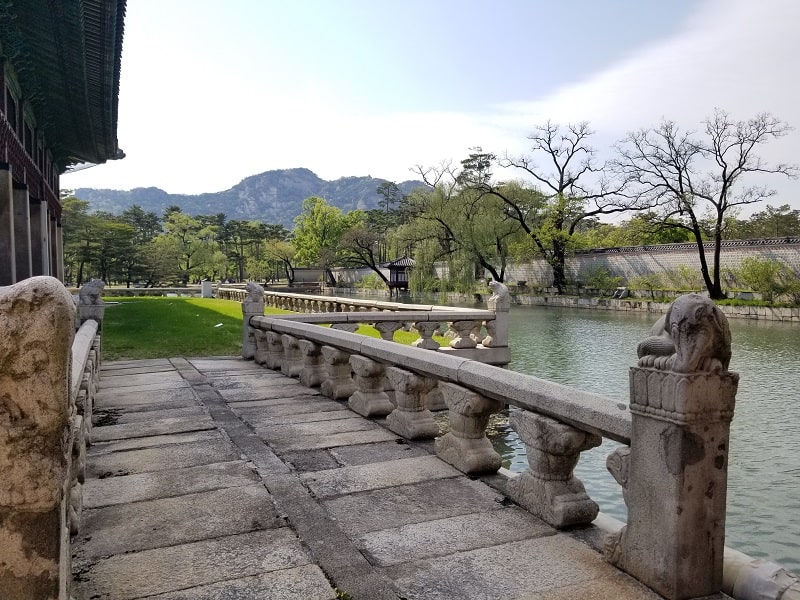
Changdeokgung used to be the favorite villa of Joseon kings and princes, since its gardens were built to have a therapeutic vibe, meant to ease them from the burdens of running a kingdom. Furthermore, the building itself truly feels like an extension of the earth and trees, creating the vibe of being one with nature.
This royal palace also houses plenty of artifacts dating all the way back to the ancient period of samhan (or the era of the Three Kingdoms of Korea). This was the perfect setting for these cultural treasures, because unlike the resplendent Gyeongbokgung Palace, Changdeokgung felt muted and blended in well with the surroundings.
Nowadays it is also known as the most well-preserved palace in Seoul, and was the only Seoul palace that made the UNESCO World Heritage List in 1997.
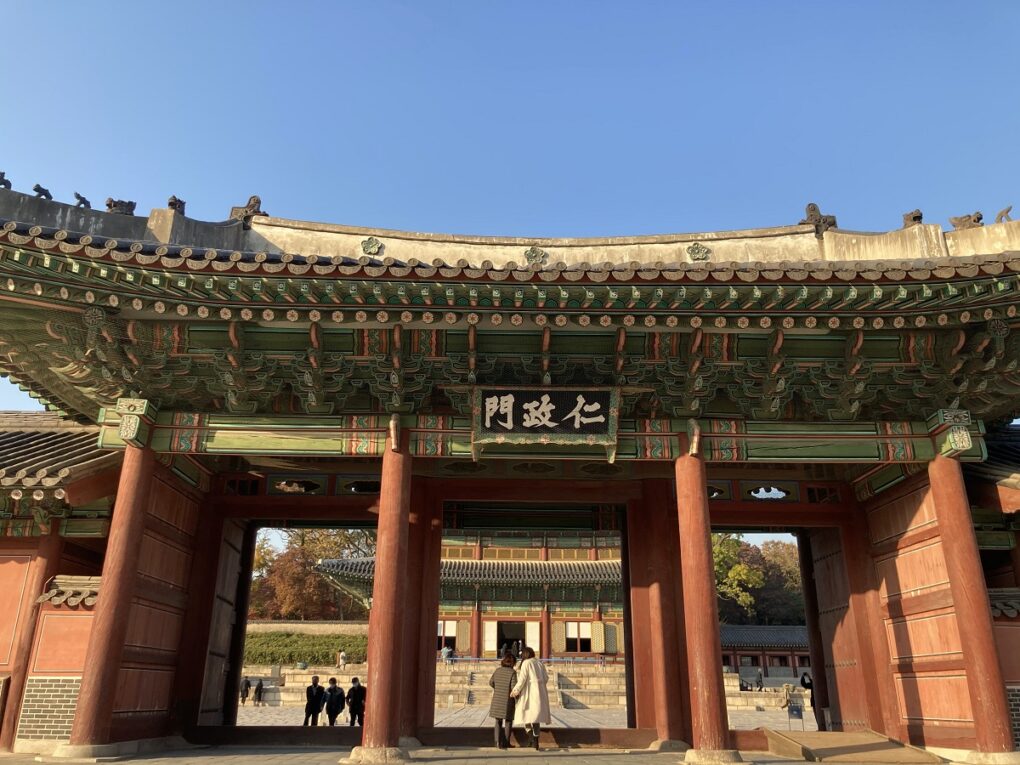
Fun Fact: during the Goryeo and the Joseon period, this is where the gwageo, or national civil service exams, took place. Sadly the examinees and palace officials in charge of the event couldn’t wander beyond the restricted area to admire the garden without obtaining the King’s permission. If you’re curious to see what this looks like, sometime every October there’s a reenactment of the gwageo siheom process at this palace’s Injeongjeon Hall.
Gyeonghuigung Palace
Hours: closed on Mondays; 9AM to 6PM
Season: any season
Entrance Fee: Free
How to Get There: Seodaemun Station (Line 5, Exit 4)
Found on the west side of Seoul, this royal palace served as the King’s shelter whenever an emergency occurred. It used to be inconspicuous, hidden behind the slanted geography of the surrounding mountain, which made it the perfect hideout.
Now it’s the perfect area to view N-Seoul Tower without getting bothered by the raucous noises of Seoul. Too bad we couldn’t see how huge it used to be, because Gyeonghuigung used to have over a hundred halls and a bridge that traveled all the way to Deoksugung before the Japanese destroyed most of Korea’s palaces during the Imjin War (1592-1598).
That’s why, somewhere near the palace and the museum, almost near the parking lot in fact, there lies a concrete structure that used to be a Japanese bunker in World War II. Sadly, current restoration efforts were not given priority, and only a third of the palace grounds have been fixed.
Also, unlike the other Seoul palaces, this one feels more abandoned rather than its namesake; “serene.” Furthermore, some locals say that nobody really wants to come see it because it was so neglected, to the point that mountain tigers used to visit long ago and use it for rest.
Don’t worry about tigers coming now, though. Korean officials finally took care of the grounds and still use it for events like the recreation of the gwageo.
The number of people coming to see the nearby Seoul Museum of History has thusly increased the number of people wanting to see this palace, as well as understand the role it played in sheltering ten Joseon kings. The museum remains a great source of understanding how Korea has developed into the metropolis we know today.
Deoksugung Palace
Hours: closed on Mondays; 9AM to 6PM
Season: best in fall
Entrance Fee: Adults: ₩1000; Children: ₩500
How to Get There: Sicheong Station (Line 1, Exit 1)
After the Imjin War, King Seonjo used this as a temporary place to stay. Years later, King Gojong thought it would be a brilliant idea to legalize it into a legitimate palace before stepping down to make way for the last King of the Joseon Dynasty: Sunjong.
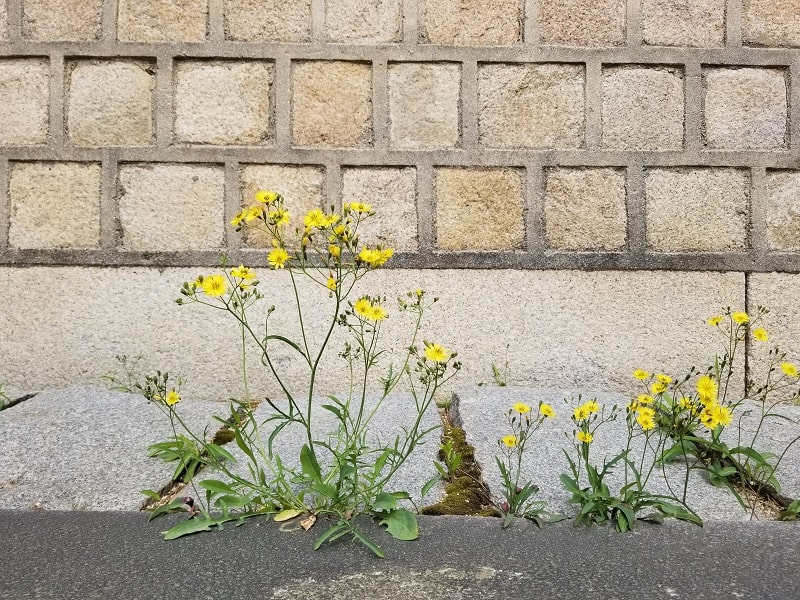
Perhaps what’s so fascinating about Deoksugung palace is that it has a lot of foreign architecture incorporated into the design. There’s even a European-style stone wall that surrounds the entire palace.
Specifically the Jeonggwanheon Pavilion, for example, was designed by a Russian architect that used Western styles to give foreign banquet guests a feel of being acknowledged and welcomed. Local officials marveled at the infusion, thinking that this is a way to quietly view the world without leaving Seoul.
Gojong’s reasoning as to why he increased the Western influence is to make Korea seem like a modern and forward country, with the hopes at the time of keeping the Japanese at bay. Seokjojeon Hall is a far cry from Korean architecture; instead of wood it is made of stone, and is known as Korea’s first European-style building.
What a lot of people don’t know is that there’s a 45-minute tour of Seokjojeon Hall that lets you see the reception room on the first floor, and then take you to the upper floors where the central hall and the private bedrooms (including royal bathrooms) are located.
If you firmly believe in superstitions, I've been told by locals not to bring your lover near the stone wall, because the ghosts of the palace servants hated to see couples happy, and would curse them to eventually break up.
Changgyeonggung Palace
Hours: closed on Mondays; 9AM to 9PM
Season: best in spring
Entrance Fee: Adults: ₩1000; Children: ₩500
How to Get There: Hyehwa Station (Line 4, Exit 2), ride the Bus 301 at the Hyehwa Station-Marrionier Park Bus Station (혜화역.미로니에공원 정류장(01220)) then get off at the Changgyeonggung Palace – Seoul National University Hospital Bus Station (창경궁.서올대학교병원 정류장(01002))
Found in the middle of Seoul, this was erected by King Sejong as a gift to his father, King Taejong. Most of the people housed here over the years were queens and concubines. Eventually, this place was renovated during the time of King Seongjong, to ensure the comfort of his mother and grandmother as well as the other elders in his family.
This is why the living quarters in this palace are bigger compared to the other Seoul palaces. However, this was also the source of many royal family issues, like the brewing hatred between the king and the crown prince, and the queen’s nasty attitude towards the royal consorts.
Other horrible secrets include the death of Prince Sado after his father, King Yeongjo, ordered to have him locked up in a rice chest. Sado was also not a good guy, either – but hey, all of these are just some of the fascinating tales you'll learn on your visit here.
Sadly, this was also one of the palaces attacked during the Japanese occupation, turned into a botanical garden and zoo. Said botanical garden was also patterned like a famous one in France, which is why it’s so elaborately Western and huge – huge enough to be considered the largest botanical garden in Asia at the time.
Only the botanical garden remains standing today. Just a short walk from this place is Jongmyo Shrine, where the ancestral tables of kings and queens of Joseon Dynasty are entombed.
Special Mention: Unhyeongung Royal Residence
Hours: closed on Mondays; 9AM to 7PM
Season: best in spring
Entrance Fee: Adults: ₩1000; Children: ₩500
How to Get There: Anguk Station (Line 3, Exit 4)
This is not a Seoul Palace per se, but it could qualify as one for many, because it’s widely known as the residence of King Gojong’s father: Heungseon Daewongun. The reason it’s featured here is because most historically important events of the Joseon period took place within the walls of this residential home.
If you're a fan of historical K-Dramas, you've probably seen some part of this residence. That’s why, if you come see it in person, you’ll be treated to informative details on how royalty used to live in relatively recent times.
Every room in here contains a mannequin of people dressed in various types of hanboks that displayed their social status. Other events also feature the royal wedding ceremony reenactment, which allows you to have a glimpse of how King Gojong and Empress Myeongseong were wed.
Best Tours of Seoul Palaces
Walking around the palaces is better if you have a guide educating you thoroughly about what you are seeing and experiencing. It’s also fun to hear inside stories and facts about the area that may even make you want to do more research on Korean history and the lives of the people who resided there.
- Moonlight Tour at Changdeokgung Palace
Visit the most beautiful palace in Seoul at night—even though the garden is gorgeous during the day, it is ten times more breathtaking at night. Book your tour on Changdeokgung’s website.
- Seoul Historic Walking Tour
This tour allows you stop at Changdeokgung during the day, and even witness the Changing of the Guards Ceremony at Gyeongbokgung. This is an easy tour of Seoul’s palaces that tells you all the fun and hilarious shenanigans the royals got themselves into, plus a bit of history. More details are included in this website.
- Gyeongbokgung Palace Hanok Village
The Hanok Village tour lets you imagine how people from the Joseon Dynasty traveled from the Bukchon Hanok Village to Gyeongbokgung Palace. The beauty about it is that it has activities you and your friends or family can do during the tour.
These include trying on the different hanboks, making your own hanji (traditional paper art), and trying local delicacies of the season. Also, your guide will give you a detailed explanation of Korean architecture as you move from the village to the palace; see the itinerary and the full details on this website.
- Seoul Palace Snap Shooting Tour
Bring a professional photographer along with you as you visit three out of five ancient palaces in Korea! While enjoying the tour, you’ll also be taken to the best spots that truly capture – not only you – but also the intricate Korean architecture serving as your backdrop.
At the very least you can rest reassured that after this tour your photos will definitely be nice. Learn more about this tour here.
FAQ About Palaces in Seoul
There are five palaces in Seoul, all of which were built during the Joseon Dynasty (1392-1910).
Also known as the largest and grandest, it is not a surprise to know that Gyeongbokgung Palace is the most well-known out of the royal palaces in Seoul.
Aside from being known as the most well-preserved palace in Seoul, the beauty about Changdeokgung is that it has a secret garden called the Huwon.
It depends on your preference, but a lot of locals recommend Changdeokgung due to its vibrant scenery and tranquil vibe. But I also feel that Deoksugung is just as wonderful, and most of its elements feel elegant and modern.

Personalized says
Thanks for the recommendations. I'd like to visit here as soon as possible!
Max says
You're very welcome!